Natural wood interior design ideas for durable walls, floors and built-ins
a[data-rs-seo-link]{text-decoration:underline!important;color:#1a56db!important;cursor:pointer!important;}a[data-rs-seo-link]{text-decoration:underline!important;color:#1a56db!important;cursor:pointer!important;}
Why natural wood still matters in interior design
Natural wood interior design is not limited to rustic spaces. When it is specified carefully, wood adds warmth, scale, acoustic softness and a clear sense of material quality that painted gypsum board, plastic laminates and synthetic panels often cannot provide in the same way. In strong interiors, wood has a defined role: it may frame a feature wall, calm a ceiling, make storage feel architectural, or create a durable surface in areas people touch every day. The result depends on choosing the right species, cut, finish and installation detail for the space, rather than treating all wood as the same decorative skin.
That practical approach matters because wood continues to respond to moisture after it is milled. The USDA Forest Service Wood Handbook explains that wood changes dimension as it gains or loses moisture, which is why acclimation, expansion gaps and humidity control are design issues, not afterthoughts. (fpl.fs.usda.gov) Finish choices also affect indoor conditions. The U.S. Environmental Protection Agency notes that pressed wood products, adhesives and varnishes can release volatile organic compounds during and after remodeling. (epa.gov)
For more coverage of finish materials and interior surface choices, visit the Interior Finishes section.
Match the wood to the design intent
Before selecting a species or finish, define what the wood needs to do. A feature wall, stair tread, kitchen cabinet door and slatted ceiling each place different demands on the material. Some applications are mainly visual. Others must withstand abrasion, hand oils, cleaning products, humidity swings or direct sunlight.
For quiet, contemporary interiors, pale woods such as white oak, ash, maple and birch can brighten a room without dominating it. They pair well with limestone, off-white plaster, concrete and matte metal. For richer or more traditional settings, walnut, cherry, teak tones and darker stains can add depth, although dark wood can make small rooms feel heavier if it covers too much surface area.
Grain changes the mood as much as color does. Flat-sawn boards often show more movement and cathedral grain, which can feel expressive and natural. Rift-sawn and quarter-sawn boards tend to look straighter and calmer, making them useful for modern millwork, doors and wall panels where consistency is part of the design. Veneer matching also matters. Book-matched veneer creates symmetry and drama, while slip-matched veneer can look more linear and architectural.
Where natural wood has the strongest design impact
Wood wall panels
Wood wall panels are one of the clearest ways to introduce natural texture without changing the plan of a room. Full-height panels can make a living room, hotel lobby or office lounge feel more refined, while partial-height wainscoting adds protection in corridors and dining areas. In modern interiors, wider panels and concealed fixings usually look calmer than narrow boards with visible fasteners.
Wall panels should be detailed with the same care as cabinetry. Allow for movement, use stable substrates, and avoid trapping moisture behind panels on exterior walls or basement walls. If the design calls for large continuous surfaces, engineered wood veneer over a stable core can reduce movement compared with solid boards.
Wood ceilings and acoustic surfaces
Wood ceilings can make large rooms feel warmer and more human in scale. Linear slats are especially useful because they create rhythm and can conceal acoustic backing, lighting channels or mechanical services. A natural wood ceiling can also connect open-plan kitchens, dining rooms and living areas by giving the space a continuous overhead plane.
For ceilings, weight, fire performance, access and maintenance are critical coordination points. In commercial interiors and multifamily projects, designers should align wood ceilings with local code requirements, sprinkler layouts and tested assemblies. A ceiling detail that looks good but cannot be accessed for maintenance can become a long-term problem.
Wood floors
Flooring is the most demanding interior wood application because it receives constant abrasion, point loads, sunlight and cleaning. Solid wood can be sanded and refinished multiple times, but it is more sensitive to moisture movement. Engineered wood flooring uses a layered structure that can improve dimensional stability, especially over concrete slabs or radiant heating systems when the product is approved for that use.
Finish sheen affects both appearance and maintenance. Matte and satin finishes tend to hide small scratches better than high-gloss finishes. Textured, wire-brushed or lightly distressed surfaces can be forgiving in busy homes, retail spaces and hospitality interiors, but they may hold dust if the texture is too deep.
Built-ins and cabinetry
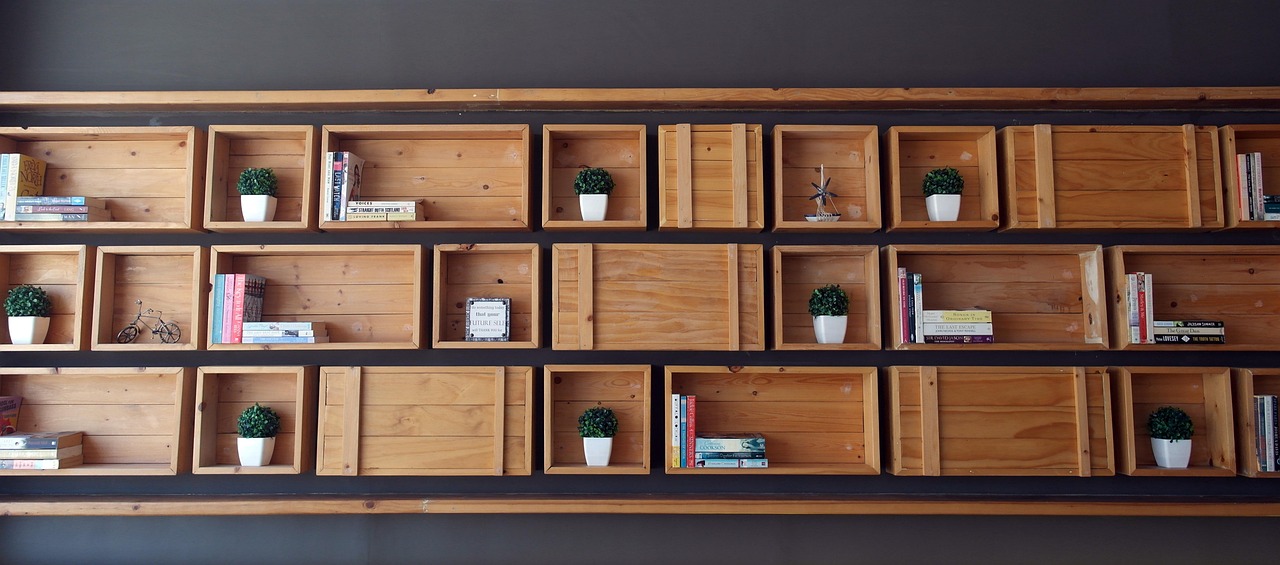
Built-ins often deliver the most value because they combine storage, architecture and finish in one element. A wood media wall, banquette, mudroom cabinet or wardrobe can organize a room while reducing the need for freestanding furniture. Natural wood should still be balanced with plainer surfaces. If every cabinet, wall and ceiling plane uses bold grain, the interior can feel visually crowded.
For cabinetry, designers often combine solid wood edging or frames with veneered panels. This approach can reduce movement, improve yield from high-value species and keep large surfaces flatter. It also allows consistent grain direction across doors and drawers.
Choose finishes with indoor air quality in mind
Natural wood is often associated with healthier interiors, but the finish system matters as much as the wood itself. Stains, sealers, adhesives, composite cores and site-applied coatings may affect indoor air quality during installation and early occupancy. The EPA describes VOCs broadly as organic compounds that can evaporate under normal indoor conditions, and it cautions that definitions based only on outdoor-air regulation may not fully address indoor exposure concerns. (epa.gov)
For homes, schools, offices and hospitality projects, it is sensible to request low-emitting adhesives, finishes and composite cores, especially where large areas of wood panels or built-ins are used. Waterborne finishes, factory-finished panels and verified low-emitting products can reduce on-site odor and curing time. Factory finishing also gives better control over coating thickness, dust contamination and consistency.
Composite wood products need particular attention. In the United States, EPA TSCA Title VI rules set formaldehyde emission requirements for regulated composite wood panels and finished goods that contain them. Products containing regulated composite wood must be properly certified and labeled as compliant. (epa.gov) This does not mean every wood product is risk-free, but it gives specifiers and buyers a concrete compliance item to check when selecting plywood, medium-density fiberboard, particleboard or veneered panels. See also: Building Materials.
- Ask suppliers whether composite cores are TSCA Title VI compliant in the U.S. market.
- Prefer factory-applied finishes when schedule, odor and consistency are priorities.
- Ventilate spaces well during installation and curing of site-applied coatings.
- Review cleaning requirements before choosing matte, oiled or highly textured finishes.
Control moisture before it becomes a design failure
Most interior wood problems are not caused by wood alone. They usually come from moisture mismatch, poor acclimation, improper substrate conditions or installation details that do not allow movement. Wood reaches different moisture levels depending on surrounding relative humidity, so a panel installed in a damp construction environment may shrink after the building is heated and occupied.
Designers and contractors should allow wood products to acclimate under conditions close to normal occupancy, not simply leave them unopened on a jobsite. Flooring should not be installed over wet slabs. Wall panels should not bridge moving joints or conceal leaks. Kitchens, bathrooms, laundry rooms and basements need extra caution because they expose wood to humidity changes and occasional liquid water.
Solid wood, engineered wood and wood veneer all behave differently. Solid boards show natural depth and can be repaired, but they move more across the grain. Engineered products and veneered panels can improve stability and use precious species more efficiently, but damaged veneer is harder to sand or repair if it is thin. The right choice depends on whether the surface is decorative, structural, repairable, removable or exposed to daily wear.
Use natural wood responsibly
Natural wood can support lower-impact interiors when it is sourced and used responsibly, but the claim should be specific. Responsible design is not simply a matter of choosing wood over another material. It includes legal sourcing, forest management, efficient cutting, durable detailing, repairability and avoiding unnecessary replacement.
Certification can help buyers verify sourcing claims. The Forest Stewardship Council states that chain of custody certification is used to track FSC-certified material through the supply chain, including building products that may be reported to green building programs. (fsc.org) Other regional or national certification systems may also be relevant depending on the market and project requirements. For designers, the practical step is to require documentation rather than relying on vague words such as eco, green or natural.
Using wood efficiently also means choosing the right grade. Clear, uniform boards are attractive, but they can be wasteful and expensive when the design does not require that appearance. Character-grade wood, finger-jointed components, engineered veneer and smaller modules can reduce waste while creating a distinctive surface. In some projects, reclaimed wood can add history and texture, but it should be checked for pests, moisture, coatings, embedded metal and compatibility with fire or hygiene requirements.
Design combinations that keep wood from feeling heavy
The most appealing natural wood interiors rarely use wood everywhere. They give wood a role and let other materials support it. A pale oak wall can be balanced with white plaster and stone. Walnut cabinetry can stand out against a quiet floor. A slatted ceiling can be paired with smooth painted walls so the room does not become visually busy.
Light changes wood dramatically. North-facing rooms may make some woods look cooler and grayer, while warm artificial light can intensify yellow, orange or red undertones. Large samples should be reviewed on site, at different times of day, and next to the actual flooring, paint, stone or textile selections. Small showroom samples often hide variation, which is part of the beauty of natural wood but can surprise clients if expectations are not set early.
| Design goal | Useful wood strategy | Common mistake to avoid |
|---|---|---|
| Make a small room feel warmer | Use wood on one focal surface or built-in rather than every wall | Covering too many surfaces with dark grain |
| Create a calm modern space | Choose straight grain, matte finish and simple panel joints | Mixing too many species and stain colors |
| Add durability in high-touch areas | Use wood rails, benches, cabinet fronts or wall protection | Selecting soft or unfinished wood where impact is likely |
| Improve material responsibility | Request sourcing documentation and use efficient grades | Relying on vague sustainability claims |
A practical checklist before specifying wood interiors
A natural wood interior should be planned as a finish system, not as an isolated style decision. Before ordering, confirm the application, substrate, fire requirements, moisture conditions, sourcing documentation, finish chemistry, maintenance plan and expected variation. If the project covers several rooms, create a wood map showing where each species, cut and finish appears. This prevents accidental mismatches and helps keep the design disciplined.
- Confirm whether the surface is decorative, structural, high-touch or moisture-exposed.
- Review full-size samples, not just small color chips.
- Check grain direction and panel matching before fabrication.
- Coordinate expansion gaps, ventilation and substrate moisture conditions.
- Request compliance documentation for composite wood and low-emitting finishes where relevant.
- Define cleaning, repair and refinishing expectations before handover.
When these decisions are made early, natural wood can age gracefully instead of becoming a maintenance burden. Its value comes from more than appearance: it can organize space, improve tactile quality and give interiors a durable material identity. The best results come from balancing beauty with building science, so the room looks warm on day one and continues to perform years later.
Frequently asked questions
Is natural wood interior design only for rustic homes?
No. Natural wood can support rustic, traditional, Scandinavian, Japanese-inspired, minimalist and contemporary interiors. The final look depends on grain, color, finish sheen, panel size and how much wood is used. Straight-grain pale wood with flush detailing can look very modern, while knotty boards and hand-scraped textures feel more rustic.
Is solid wood always better than engineered wood?
Not always. Solid wood offers depth and repairability, especially for flooring and exposed edges. Engineered wood and veneered panels can be more dimensionally stable for large wall panels, cabinet doors and installations where flatness is important. The better choice depends on use, moisture exposure, budget and maintenance expectations.
What finish looks most natural on interior wood?
Matte clear finishes, hardwax oils and low-sheen waterborne coatings often preserve a natural appearance. However, every finish changes the color and feel of wood to some degree. Samples should be reviewed under project lighting because clear finishes can make pale woods warmer and can deepen darker species.
How can wood interiors be kept from looking dated?
Use wood as an architectural material rather than a short-term trend. Simple profiles, restrained species choices, consistent grain direction and balanced neutral materials tend to age better than heavily stained, overly glossy or highly decorative treatments. Designing for repair and refinishing also helps wood remain useful over time.