Sofa furniture design for flexible and comfortable living spaces
a[data-rs-seo-link]{text-decoration:underline!important;color:#1a56db!important;cursor:pointer!important;}a[data-rs-seo-link]{text-decoration:underline!important;color:#1a56db!important;cursor:pointer!important;}
What good sofa furniture design needs to solve
Sofa furniture design is not just a question of finding a shape that looks good in a showroom. A well-designed sofa has to balance comfort, room planning, durability, upholstery performance, safety expectations, and the way people actually use a living space. For homeowners, designers, and furniture buyers, the useful question is not only whether a sofa looks stylish, but whether it can support daily sitting, lounging, conversation, entertaining, cleaning, moving, and future rearrangement.
The practical direction is clear. Adaptable forms, comfortable proportions, durable materials, and transparent product specifications now matter as much as decorative novelty. Design media have continued to highlight modular sofas, curved silhouettes, sculptural seating, slipcovers, and multifunctional pieces. At the same time, regulatory and standards bodies focus on issues such as flammability, composite wood emissions, and sustainability frameworks. These two sides belong in the same discussion: a sofa design is stronger when its construction and compliance details are considered along with its appearance. (elledecor.com)
For more furniture planning topics, visit the Furniture Design section.
Start with use before choosing a silhouette
A sofa is often one of the largest pieces in a living room, so the design process should begin with behavior, not shape. A compact apartment, a family media room, a formal reception area, and an open-plan lounge do not need the same sofa. The right choice depends on how many people will sit at once, whether users prefer upright conversation or deep lounging, whether the sofa faces a television, fireplace, window, or dining area, and whether the room needs to change for guests.
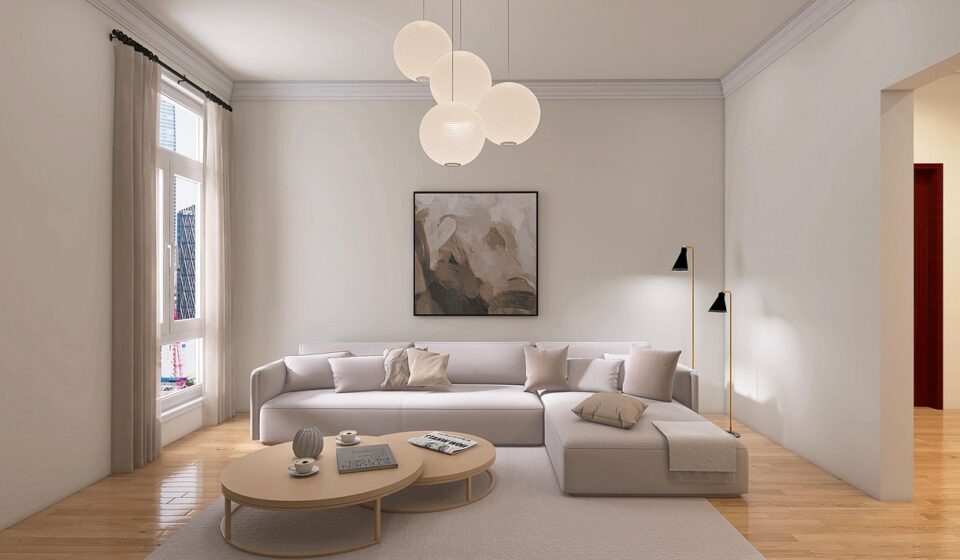
Fixed straight sofas still work well where there is a clear wall, a defined focal point, and little need for reconfiguration. Sectionals are useful when the sofa also marks the edge of a living zone in an open-plan interior. Modular systems add more flexibility because individual seats, corners, chaises, and ottomans can be rearranged as needs change. This is why modular design appears frequently in recent sofa trend coverage; its appeal is functional as well as visual, especially in homes where one room may serve as a work area, entertainment zone, and guest space. (elledecor.com)
Before selecting a shape, map the circulation path. A sofa that looks generous on a product page can make a room feel cramped if it blocks doors, balcony access, storage, or the route between the kitchen and seating area. The best design choice leaves enough space for movement while still giving the room a clear social center.
Comfort is a system, not a single soft cushion
Comfort in sofa furniture design comes from the relationship between seat depth, seat height, back angle, cushion fill, arm height, fabric touch, and user posture. A deep, low sofa can feel relaxed for lounging but may be uncomfortable for people who prefer an upright seat or need to stand up more easily. A shallow sofa can support conversation, but it may feel restrictive during movie nights. The design decision should follow the main use case.
Seat depth is one of the most important specifications. Deeper seats support reclining and layered pillows, while shallower seats make it easier to sit with feet on the floor. Back height also changes the experience. A low back creates a lighter visual profile and works well in open spaces, while a higher back can provide more support and a stronger sense of enclosure. Arm design matters too. Wide arms can act as casual surfaces for books or trays, but they increase the sofa’s footprint. Slim arms save space and create a cleaner line, though they may feel less relaxed.
Cushion construction is just as important as the outside profile. Very soft cushions may feel inviting at first, but they can lose shape faster if the internal materials are not resilient. Firmer cushions may look tailored and hold their form, yet they can feel less lounge-friendly. Many successful sofa designs combine supportive core materials with softer surface layers, aiming for comfort without immediate collapse. Comfort should be judged over time, not only during a short sit test.
Materials shape durability, safety, and indoor air quality
The hidden structure of a sofa matters as much as its visible form. Frames may use solid wood, plywood, engineered panels, metal, or mixed construction. Each material choice affects weight, cost, repairability, and durability. For residential buyers and specifiers, the most useful product information usually includes frame material, suspension type, cushion composition, upholstery grade, care instructions, and any relevant compliance statements.
In the United States, upholstered furniture is subject to federal flammability requirements under 16 CFR part 1640. The U.S. Consumer Product Safety Commission explains that the rule is intended to reduce deaths and injuries associated with upholstered furniture fires and that covered furniture must carry a permanent compliance label. This does not mean every compliant sofa performs the same in daily use, but it does make flammability labeling an important check when evaluating design and specification quality. (cpsc.gov)
Composite wood can also be relevant in sofa frames, sleeper mechanisms, storage bases, and attached tables. The U.S. Environmental Protection Agency’s TSCA Title VI program addresses formaldehyde emission standards for regulated composite wood products. For consumers and specifiers, this makes material disclosure more meaningful than vague claims such as “eco-friendly” or “safe.” If a sofa includes composite wood components, documentation and labeling should be reviewed carefully rather than assumed. (epa.gov)
Sustainability claims need the same discipline. BIFMA describes ANSI/BIFMA e3 as a furniture sustainability standard covering environmental, health and wellness, and social impacts, with a 2024 revision approved by ANSI. Although BIFMA is especially associated with business and institutional furniture, the framework is useful for understanding the kinds of issues serious furniture standards examine: materials, emissions, energy, human health, and responsible practices. (bifma.org)
Upholstery is where design meets maintenance
Upholstery strongly influences how a sofa looks, feels, ages, and fits daily life. A pale bouclé sofa may create a soft sculptural look, but it may not be the easiest option for households with pets, children, or frequent dining in the living room. Leather can develop character and clean more easily in some situations, but performance varies widely by finish and quality. Performance fabrics can resist stains and wear, yet buyers should still check cleaning codes, abrasion information where available, and whether the texture is comfortable for long sitting.
Color and texture should also be considered as part of the room’s architecture. Neutral upholstery is flexible and can be updated with pillows or throws. Strong colors make the sofa a focal point, which works best when the rest of the room is controlled. Textured fabrics can soften minimal interiors, while smooth upholstery can help a curved or modular form look more precise. See also: Building Materials.
Removable and replaceable covers deserve attention because they can extend practical design life. A slipcovered sofa is not automatically casual or old-fashioned; with the right proportions, it can make maintenance easier and reduce the pressure to replace the whole piece when the surface wears. Recent design coverage has connected slipcovers and washable surfaces with real-home needs such as guests, pets, and children, which is a useful reminder that maintenance is a design issue, not an afterthought. (homesandgardens.com)
Common sofa design directions and when they work
| Design direction | Best use case | Main limitation to check |
|---|---|---|
| Modular sofa | Flexible rooms, open plans, growing households, renters who may move | Connections, cushion alignment, and whether modules stay stable in daily use |
| Curved sofa | Conversation areas, large rooms, softening angular architecture | Needs more floor planning and may waste space against straight walls |
| Low deep lounge sofa | Media rooms, relaxed family spaces, informal interiors | May be harder to stand from and less suitable for upright sitting |
| Compact track-arm sofa | Apartments, narrow rooms, multipurpose spaces | Can feel less lounge-oriented if seat depth is too shallow |
| Sleeper sofa or storage sofa | Guest rooms, studios, homes needing hidden function | Mechanism quality, mattress comfort, weight, and ease of opening |
These categories should not be treated as rigid rules. A modular sofa can be elegant, a compact sofa can be comfortable, and a curved sofa can be practical if the room is planned around it. The value of the comparison is that it shows the trade-offs before purchase or specification. Strong sofa furniture design is rarely about maximizing one feature; it is about balancing the feature set against real constraints.
How to evaluate a sofa design before buying or specifying
A useful evaluation checklist should combine visual, functional, and technical questions. First, check proportion. Does the sofa match the size of the room, the height of nearby tables, and the scale of other furniture? A sofa that is too bulky can overpower a room, while one that is too small can make the seating area feel incomplete.
Second, test posture. Sit upright, lean back, lie down if that is part of the intended use, and pay attention to where the back, knees, neck, and arms naturally fall. If multiple household members will use the sofa, the design should not only fit the tallest or youngest person. For shared homes, medium seat depth and supportive cushions often perform better than extreme lounge proportions.
Third, inspect construction details. Look for stable legs, even seams, aligned modules, smooth mechanisms, firm frame response, and cushions that recover their shape. Ask for information about frame material, cushion fill, suspension, upholstery care, and relevant labels. In a retail setting, vague answers do not automatically mean the sofa is poor, but clear specifications make comparison much easier.
Fourth, consider repair and refresh options. Can cushion covers be removed? Are replacement parts or covers available? Can the legs be changed? Is the design simple enough to reupholster later? Sofas are resource-intensive products, so a design that can be maintained and refreshed often has more long-term value than one that depends on a short-lived trend.
Frequently asked questions
What makes a sofa design look modern?
A modern sofa often has cleaner lines, balanced proportions, considered materials, and a clear relationship to the room layout. However, “modern” does not have to mean cold or minimal. Curved forms, textured fabrics, modular layouts, and warmer colors can all feel current when they are used with restraint and supported by good construction.
Is a modular sofa better than a regular sofa?
A modular sofa is better when flexibility matters: changing room layouts, open-plan zoning, entertaining, or future moves. A regular fixed sofa may be better when the room is small, the layout is stable, or the buyer wants a simpler structure with fewer connection points. The better choice depends on use, not the category name.
Which sofa upholstery is easiest to live with?
There is no single best upholstery for every home. Performance fabrics, some protected leathers, and removable covers can be easier to maintain, but cleaning codes and care instructions matter. The safest approach is to match upholstery to the household’s habits, including pets, children, sunlight exposure, food, and cleaning frequency.
How can a sofa design last longer stylistically?
Choose balanced proportions, avoid overly exaggerated details, and use color strategically. A sofa in a flexible shape and durable fabric can be updated with pillows, rugs, lighting, and side tables. Designs that are comfortable, repairable, and visually calm tend to outlast highly specific decorative trends.
The takeaway for sofa furniture design
The most successful sofa furniture design brings together comfort, adaptability, material clarity, maintenance, and room planning. Trends can be useful because they show how lifestyles are changing, especially the demand for flexible and multifunctional seating. But a sofa should not be selected by trend language alone. A stronger approach is to define the room’s use, choose the right configuration, verify construction and labels, and select upholstery that can handle real life.
For designers, retailers, and homeowners, the information gap is often not about style inspiration; it is about connecting style to practical performance. A sofa that looks good, supports the body, fits the room, discloses its materials, and can be maintained over time is more valuable than a design that only photographs well. That is the practical standard modern sofa design should meet.