How to choose stone building materials for durable projects
a[data-rs-seo-link]{text-decoration:underline!important;color:#1a56db!important;cursor:pointer!important;}a[data-rs-seo-link]{text-decoration:underline!important;color:#1a56db!important;cursor:pointer!important;}
What makes stone a practical building material
Stone building materials should not be selected on appearance alone. A reliable specification matches the stone’s absorption, strength, bedding, finish, thickness, and fixing method to the project exposure. Granite, limestone, sandstone, slate, marble, travertine, and quartzite can all perform well in the right setting, but they do not behave the same way in freeze-thaw climates, wet interiors, high-traffic paving, or mechanically anchored facades. The core task is to connect the stone type to measurable performance, then detail water management, anchorage, movement, and maintenance. Durable stone construction starts before procurement, not after installation.
The U.S. Geological Survey defines dimension stone as natural rock quarried into blocks or slabs that meet requirements for size, shape, color, texture, finish, durability, strength, and, where relevant, polish. That definition is useful because it separates architectural stone from crushed stone aggregate. A cladding panel, stair tread, paving slab, coping, veneer unit, or cut ashlar block is selected and fabricated for a specific visual and performance role.
Stone is a category, not a single material
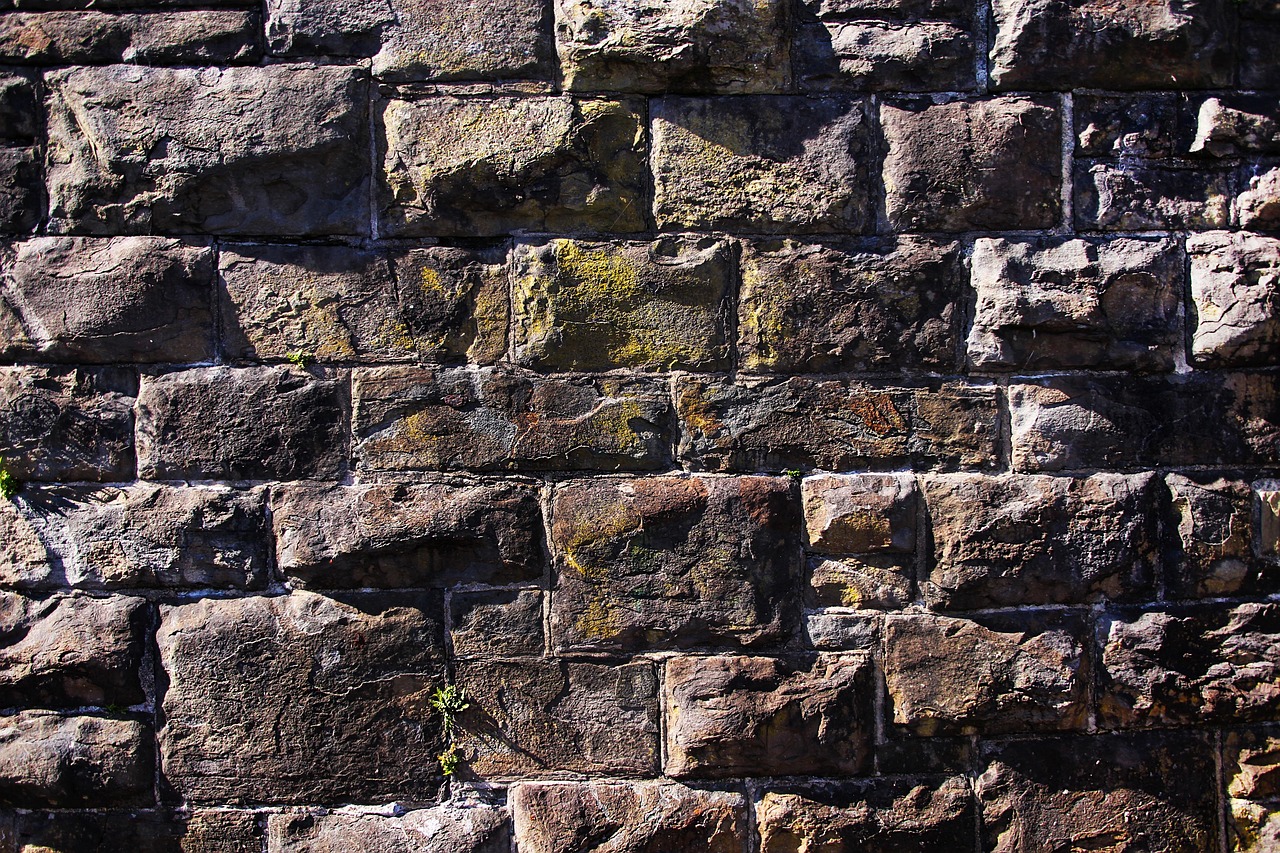
A common specification error is treating “stone” as one material with one set of properties. The USGS lists granite, limestone, marble, sandstone, and slate among the principal dimension stone types, with other special types used where the design calls for them. Each family has its own mineralogy, pore structure, splitting behavior, abrasion resistance, and maintenance profile.
| Stone family | Common building uses | Strengths | Limits to check |
|---|---|---|---|
| Granite | Exterior cladding, paving, curbs, steps, countertops | High hardness, strong abrasion resistance, broad finish range | Panel weight, anchor design, thermal movement, finish slip resistance |
| Limestone | Wall panels, ashlar, trim, copings, landscape walls | Workable, consistent appearance, long architectural history | Absorption, freeze-thaw exposure, acid sensitivity, bedding direction |
| Sandstone | Walling, paving, steps, landscape elements | Textured surfaces, good visual warmth, split-face options | Layering, delamination risk, water movement, salt exposure |
| Slate | Roofing, flooring, cladding, landscape paving | Splits into thin durable sheets, strong layered aesthetic | Cleavage direction, fastening, thickness tolerance, slip resistance |
| Marble, travertine, quartzite | Interior walls and floors, selected exterior or landscape uses | Distinctive veining, premium finishes, strong design identity | Staining, acid etching for carbonate stones, finish durability, exterior suitability |
This table is not a ranking. It is a reminder that stones from the same family can show different test results depending on quarry, bed, and fabrication. A dense limestone may be suitable where a more porous limestone would be risky. A sandstone that performs well as a walling unit may not be appropriate for paving exposed to deicing salts. The project exposure should drive the selection.
Match the stone to exposure and building function
Exterior facades and veneer
Exterior stone must resist gravity loads, wind loads, thermal movement, moisture, and building-frame movement. For dimension stone cladding, ASTM C1242-26 is an important reference because it covers selection, design, and installation considerations for dimension stone attachment systems. ASTM notes that stone and support systems are part of the building skin and must be compatible with the curtain wall, backup wall, and superstructure.
That is why exterior stone panels should not be treated as decorative tiles. Mechanically anchored systems need project-specific engineering, corrosion-resistant anchors, correct edge distances, setting tolerances, drainage paths, and movement joints. Adhesive attachment may be suitable for some interior conditions, but exterior use requires careful review of code requirements, height, loads, and manufacturer limitations. The Natural Stone Institute’s 2024 Dimension Stone Design Manual also expanded vertical installation and anchorage guidance, reflecting the importance of support detailing in modern building envelopes.
Floors, paving, and stairs
Floors and paving put different demands on stone. Abrasion resistance, slip resistance, finish texture, thickness, breaking strength, and replacement strategy often matter more than facade anchorage. A polished interior stone may be attractive, but it may not be suitable for wet entrances, pool surrounds, commercial lobbies, or exterior steps unless the finish and maintenance plan address slip risk. For exterior paving, freeze-thaw action, drainage, bedding material, joint width, deicing chemicals, and surface texture should be evaluated together.
Landscape walls, caps, and copings
Landscape stone is often exposed to more water than a vertical wall panel. Retaining walls, garden walls, caps, and copings need to shed water rather than trap it. The National Park Service’s preservation guidance explains that water and salts can contribute to efflorescence, spalling, cracking, and crumbling in masonry. It also emphasizes that mortar should be compatible with the masonry and, in traditional systems, softer and more sacrificial than the units it holds together.
The same principle applies beyond historic buildings. Hard, impermeable repairs can force moisture into softer stone. A coping without a drip, a wall without drainage, or a dense patching mortar used on porous stone can shorten the service life of the assembly even when the stone itself is sound.
The performance data that should be in a stone specification
A good stone specification should go beyond color, finish, and nominal size. It should request recent test data from the same stone source, or from a source demonstrably equivalent to the material being supplied. Because stone is geological, some variability is expected. The specification needs to show whether the design has allowed for that variability.
| Specification question | Common reference | Why it matters |
|---|---|---|
| What stone type is being supplied? | ASTM C615 for granite, C568 for limestone, C503 for marble, C616 for quartz-based stone, C1527 for travertine | Connects the material to recognized dimension stone requirements instead of a loose trade name |
| How much water can the stone absorb? | ASTM C97/C97M | Helps compare stones of the same type and evaluate staining, freeze-thaw, and wet-use risk |
| How strong is it under compression? | ASTM C170/C170M | Important for load-bearing, paving, step, and masonry applications |
| How strong is it in bending? | ASTM C880/C880M | Critical for panels, slabs, treads, and pieces spanning between supports |
| How will it be attached? | ASTM C1242 and project engineering | Prevents treating anchors, kerfs, clips, and backup structure as afterthoughts |
Test data should be read against the actual application. Absorption is not automatically a defect; many traditional stones have performed for decades because the detailing allowed them to dry. High strength is useful, but it does not replace drainage, movement joints, and correct anchorage. The goal is not to find a perfect number. The goal is to confirm that the selected stone and assembly are suitable for the exposure.
Sourcing and market context for buyers
Availability also affects specification. In the U.S. Geological Survey’s Mineral Commodity Summaries 2026, domestic producers sold or used an estimated 2.3 million tons of dimension stone in 2025, valued at about $460 million. The same summary reported production by 150 companies operating 215 quarries in 34 states. By tonnage, the leading producing states were Texas, Wisconsin, Vermont, Indiana, and Georgia.
The reported U.S. domestic mix shows why limestone, granite, and sandstone often appear in building-material discussions. In 2025, limestone accounted for about 46% of domestic dimension stone sold or used by tonnage, followed by granite at 18% and sandstone at 17%. The remaining share was divided among dolomite, slate, quartzite, marble, and miscellaneous stone. These figures describe U.S. domestic production, not every imported slab or regional supply chain, but they give buyers a useful baseline for availability.
Procurement teams should ask early about quarry capacity, block size, finish capability, lead time, testing, mockups, replacement stock, and project-specific documentation. Imported stone can be appropriate, but longer logistics chains make approvals, samples, and contingency planning more important. Domestic stone can reduce transportation distance for some projects, but it still needs the same performance verification. See also: Buying Guides.
Sustainability depends on durability, documentation, and transport
Natural stone is often described as a low-processing material because it is quarried, cut, finished, and installed rather than fired like brick or manufactured through cement chemistry like concrete. That does not make every stone choice automatically sustainable. Quarrying, sawing, finishing, packaging, transport, installation, maintenance, and replacement all contribute to the environmental profile.
The Natural Stone Institute published industry-wide environmental product declarations in 2022 for natural dimension stone applications including cladding, flooring/paving, and countertops. The organization described those declarations as cradle-to-grave documents covering quarrying, fabrication, installation, care, maintenance, and disposal. It also reported Health Product Declarations for common stone types used in the dimension stone industry.
For design teams, the practical step is to request documentation and compare materials on the same functional basis. A stone panel, porcelain panel, precast unit, brick assembly, or manufactured veneer may have different service lives, substructures, maintenance intervals, and replacement assumptions. Embodied carbon discussions should use the same application, service life, and scope, not a generic claim that one category is always better.
Common specification mistakes to avoid
- Choosing color before exposure. Color and veining matter, but the first filter should be climate, moisture, traffic, loading, and use.
- Using trade names as technical proof. A name does not replace quarry source, stone type, test reports, and finish samples.
- Ignoring bedding direction. Sedimentary stones may perform differently depending on how they are cut relative to natural bedding.
- Relying on sealers to solve design problems. Sealers can help with staining in some applications, but they do not replace drainage, slope, compatible mortar, or correct detailing.
- Installing exterior panels without engineered support. Stone cladding must be designed as part of the envelope, not added after the wall is resolved.
- Skipping mockups. Mockups reveal color range, joint appearance, anchorage coordination, lippage, cleaning methods, and workmanship expectations.
- Using incompatible repair mortar. Repairs that are too hard or too impermeable can damage softer masonry by redirecting moisture and salts.
- Forgetting future replacement. Facade panels, paving units, and stair treads should be detailed so damaged pieces can be replaced without excessive demolition.
A practical decision workflow
For project teams comparing building materials, stone selection should follow a clear sequence instead of starting with visual preference alone.
- Define the application: facade, veneer, load-bearing masonry, flooring, paving, stair, coping, countertop, or landscape wall.
- Identify exposure: freeze-thaw, salt, heavy rain, sun, pollution, traffic, impact, wet interior use, or cleaning chemicals.
- Shortlist stone families that have proven performance in similar conditions.
- Request representative samples showing the full accepted color and texture range.
- Obtain current test data for absorption, density, compressive strength, flexural strength, and any application-specific property.
- Confirm installation method, support, jointing, drainage, movement accommodation, and maintenance access.
- Build and approve a mockup before full procurement.
- Document cleaning, sealing, inspection, and replacement procedures for the owner.
This workflow does not make stone selection slow; it prevents late changes. The most expensive stone failures usually come from mismatched exposure, poor water management, or unclear installation responsibility rather than from the stone’s appearance.
Frequently asked questions
What are stone building materials?
Stone building materials are natural rock products fabricated for construction uses such as cladding, veneer, masonry, paving, flooring, steps, copings, wall caps, countertops, and landscape elements. Dimension stone is cut or shaped to specified sizes, while crushed stone aggregate is a separate material used in concrete, road base, drainage, and other bulk applications.
Which stone is best for exterior walls?
There is no universal best stone for exterior walls. Dense granite, suitable limestone, sandstone, slate, quartzite, and other stones can perform well when matched to climate, panel size, anchorage, water management, and maintenance. The correct choice is the one with proven performance and test data for the project’s exposure.
Does natural stone always need sealing?
No. Some stones and applications benefit from sealing, especially where staining is likely, but sealing is not a substitute for proper detailing. Exterior stone must still drain and dry. Interior floors and countertops should be evaluated by stone type, finish, staining risk, cleaning practice, and owner expectations.
How should buyers compare natural stone and manufactured stone?
Compare them by application, not appearance alone. Review structural support, weight, thickness, water behavior, repairability, service life, EPD availability, maintenance, and replacement assumptions. A manufactured veneer may suit one budget and wall type, while natural dimension stone may suit a project that values longevity, repairability, or a specific architectural character.
What should be included in a stone submittal?
A useful submittal should include quarry source, stone type, finish, sample range, test reports, ASTM references where applicable, shop drawings, anchorage or setting details, jointing plan, mockup requirements, cleaning method, sealer information if used, and maintenance guidance. For exterior cladding, engineering review of attachment and backup conditions is essential.