Bamboo building materials for low-carbon construction projects

a[data-rs-seo-link]{text-decoration:underline!important;color:#1a56db!important;cursor:pointer!important;}a[data-rs-seo-link]{text-decoration:underline!important;color:#1a56db!important;cursor:pointer!important;}
Why bamboo building materials matter now
Bamboo building materials are receiving more attention because they combine rapid renewability, useful strength-to-weight performance and an appearance that can suit both natural and contemporary architecture. They are not a simple drop-in substitute for concrete, steel or structural timber. Used in the right conditions, however, bamboo can work in full-culm frames, wall systems, panels, flooring, screens, roofing components, formwork and engineered boards. The practical lesson from recent standards and professional guidance is clear: bamboo should be specified as an engineered construction material, not treated as a rustic decorative product.
For readers comparing sustainable products across the sector, the Building Materials category offers related coverage of material selection, performance and construction trends.
What counts as bamboo building materials
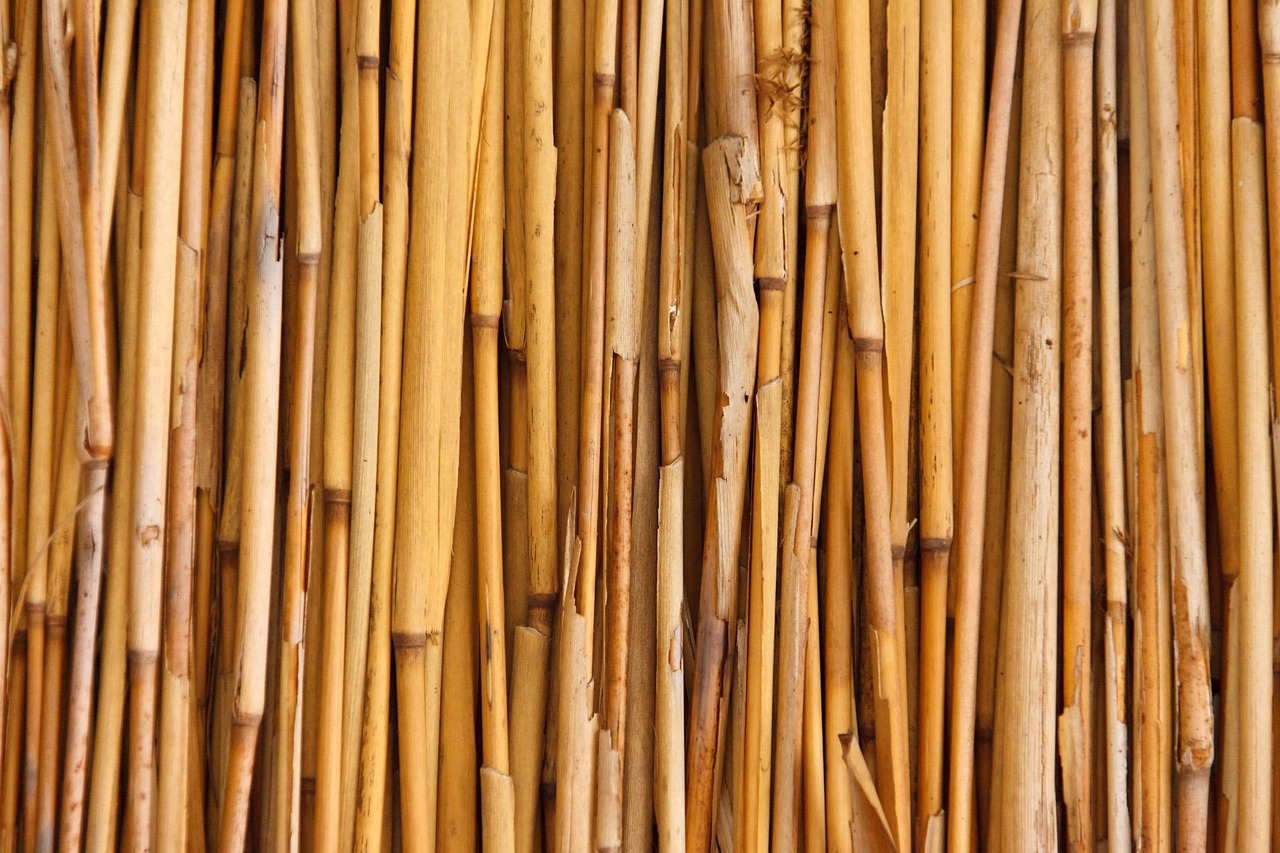
Bamboo is a woody grass, not a tree. Its construction value depends on species, age, treatment, grading and manufacturing method. In building discussions, bamboo can mean anything from round poles used as primary structure to laminated boards used like timber panels. Because the term covers such a wide range, specification should start with the product form.
| Material type | Typical use | Key specification issue |
|---|---|---|
| Full-culm bamboo poles | Frames, roofs, trusses, columns, light structures | Requires species identification, diameter and wall-thickness grading, connection design and durability protection |
| Split bamboo and woven bamboo | Wall infill, mats, screens, ceilings, lightweight panels | Performance depends on treatment, backing material, fire rating and moisture exposure |
| Laminated bamboo boards | Flooring, panels, stairs, furniture-grade joinery, interior surfaces | Adhesives, emissions, dimensional stability and wear layer should be documented |
| Bamboo scrimber and densified bamboo | Decking, boards, structural or semi-structural components where approved | Needs product-specific testing, quality control and code acceptance |
| Bamboo composite systems | Shear walls, prefabricated panels, hybrid assemblies | Must be evaluated as a system, not only as raw bamboo |
This distinction matters because standards do not cover every product form in the same way. ISO 22156:2021 addresses structural design using full-culm round bamboo for certain one- and two-storey buildings. Engineered products such as glue-laminated bamboo, cross-laminated bamboo, oriented strand bamboo and densified bamboo generally need separate product data, testing and approval pathways. That does not make engineered bamboo unsuitable; it means the supporting evidence has to match the exact product being specified.
The performance case for bamboo
Rapid renewability and carbon-conscious design
One reason bamboo attracts architects and developers is its short harvest cycle. FAO and other technical references commonly describe construction bamboo as suitable for harvesting after several years of maturity, often around three to five years depending on species and local practice. That is much faster than many conventional timber rotations. For carbon-conscious design, bamboo is of interest because it can be harvested repeatedly from managed clumps or stands while new culms continue to grow.
Even so, a renewable feedstock does not automatically make every bamboo product low impact. Processing, adhesives, preservative treatment, transport distance, replacement cycles and end-of-life options all affect the final environmental profile. World Green Building Council publications have emphasized the importance of embodied carbon across material production and construction processes. Bamboo should be assessed through the same whole-life lens, rather than assumed to be low carbon in every application.
Strength-to-weight and architectural flexibility
Round bamboo culms have an efficient tubular form, with dense fibers concentrated near the outside wall. This helps explain why full-culm bamboo can deliver useful performance with relatively low material mass. Designers have used this property for long-span roofs, lightweight pavilions, houses and community buildings in regions where suitable species and construction knowledge are available.
The architectural value is not only structural. Bamboo can support curved, layered and expressive forms that may be difficult or expensive to achieve in sawn timber or steel. In interiors, laminated bamboo panels and flooring can also provide a hard, warm-toned surface for residential, hospitality and commercial projects.
Thermal comfort and lightweight assemblies
Bamboo-based panels, mats and roof components are often used in warm climates as part of ventilated, shaded and lightweight building envelopes. UN Trade and Development has discussed bamboo’s potential as a modern building material, including manufactured panels and roofing applications. In practice, the performance of these systems depends less on bamboo alone and more on the complete assembly: ventilation gaps, waterproof layers, vapor control, overhangs and maintenance access.
The limits that decide whether bamboo is suitable
Codes and standards are still uneven
The main practical barrier for bamboo building materials is not lack of interest; it is uneven code recognition. ISO 22156:2021 provides an international design framework for full-culm bamboo in defined building types, but local building departments, insurers and engineers may still require additional documentation. In the United States, acceptance often depends on the adopted code, the authority having jurisdiction and whether a product has an evaluation report or other recognized evidence. ICC-ES has criteria and evaluation activity related to structural bamboo, but this should be treated as a pathway for compliance, not as blanket approval for any bamboo pole or panel.
For project teams, the implication is straightforward: discuss bamboo with the structural engineer and code official early. Waiting until late design can create delays if testing, calculations, fire data or quality-control records are missing.
Durability depends on moisture control
Bamboo is organic, so it is vulnerable to decay, insects and fungal attack if it is poorly harvested, untreated or exposed to repeated wetting. The Institution of Structural Engineers manual for bamboo structures, developed around ISO 22156:2021, emphasizes mature selection, adequate drying, treatment, detailing and maintenance. Good bamboo design keeps culms dry, ventilated, inspectable and out of direct ground contact.
Boron-based treatment is widely discussed in bamboo preservation guidance because it can protect against insects and decay organisms when correctly applied. It is not a substitute for sound detailing. If rainwater is trapped at joints, if pole ends are left exposed, or if treated bamboo is placed where preservatives can leach out, service life can fall sharply. Durable bamboo buildings usually rely on generous roof overhangs, raised bases, drained connections and replaceable members.
Connections are a critical design point
Connections are often the weak point in full-culm bamboo construction. A bamboo pole is hollow, tapered and variable, so standard timber assumptions do not always apply. Bolts can split the culm if loads are concentrated without reinforcement. Lashings, pins, grout-filled nodes, clamps and steel inserts may all be used, but each detail needs engineering logic and construction quality control.
This is where experienced design makes a practical difference. A visually impressive bamboo frame can still underperform if the joint transfers load poorly, traps water or cannot be inspected. For structural projects, connection design should be supported by standards, testing, precedent or engineer-approved calculations. See also: Buying Guides.
Fire, acoustics and building envelope performance need project data
Bamboo is combustible, as timber is combustible, so fire performance has to be addressed through design. Some bamboo products can be treated, encapsulated or used in assemblies with tested ratings, but claims should be product-specific. Acoustic separation, air leakage, thermal bridging and moisture movement also depend on the whole assembly. A bamboo wall panel is not automatically a code-compliant wall system.
How bamboo compares with common material choices
Bamboo is best understood as a complementary material. It can reduce reliance on more carbon-intensive materials in certain assemblies, but it does not replace every beam, slab or foundation. Concrete remains dominant for foundations, compression-heavy infrastructure and fire-rated mass. Steel remains important for long spans, high-rise frames and highly standardized connections. Timber has mature grading, code and supply systems in many markets. Bamboo’s strongest opportunity is where its fast renewability, light weight and local availability fit the building type.
| Design question | Where bamboo can help | Where caution is needed |
|---|---|---|
| Is the project low-rise? | Full-culm systems are most credible in low-rise buildings within recognized design limits | High-rise or heavily loaded structures need extensive engineering and approvals |
| Is there reliable supply? | Managed plantations and certified manufacturers can provide consistent material | Unidentified poles from informal supply chains are risky for structural work |
| Will the material stay dry? | Covered roofs, shaded façades and interiors are favorable conditions | Ground contact, hidden wet zones and exposed end grain increase decay risk |
| Is the product engineered? | Boards and composites can provide more predictable dimensions | Adhesives, emissions, delamination and code reports must be checked |
A practical specification checklist
For a project considering bamboo building materials, the safest approach is to specify evidence rather than broad sustainability language. A strong specification should answer the following questions before procurement:
- Species and age: Identify the bamboo species and confirm that culms were harvested at an appropriate maturity for construction use.
- Grading: Record diameter, wall thickness, straightness, defects, moisture content and any visual or mechanical grading method.
- Treatment: State the preservative method, retention target where applicable, drying process and exposure limitations.
- Structural design basis: Name the standard, test method, evaluation report or engineer-approved calculation used for the design.
- Connection details: Show how loads transfer without splitting, crushing or trapping water.
- Fire and code evidence: Provide assembly ratings, product data or local approval documentation where required.
- Maintenance plan: Include inspection intervals, replaceable components and repair methods.
- Environmental claim boundaries: Separate verified data from general claims about renewability or carbon benefits.
This checklist is especially important for imported products. A bamboo component may look similar across suppliers, but two products can differ greatly in treatment, adhesive, density, moisture behavior and quality control.
Where bamboo is most likely to grow in construction
The near-term growth of bamboo in building materials is likely to come from three areas. First, low-rise structures in regions with bamboo expertise can use full-culm design more confidently as guidance improves. Second, engineered bamboo panels, flooring, decking and interior products can expand where manufacturers provide consistent testing and emissions data. Third, hybrid systems can combine bamboo with concrete, steel or timber, using each material where it performs best.
The responsible outlook is optimistic but selective. Bamboo is not a universal solution for sustainable construction, and exaggerated claims can undermine trust. Its real value lies in matching a fast-renewable biological material with careful engineering, transparent sourcing and climate-appropriate detailing.
Frequently asked questions
Is bamboo strong enough for buildings?
Yes, bamboo can be strong enough for certain buildings, especially low-rise structures designed around full-culm behavior and approved connection details. Strength varies by species, age, moisture content and defects, so structural use requires grading, testing or engineer-approved design values.
Are engineered bamboo products the same as full-culm bamboo?
No. Full-culm bamboo uses the round pole, while engineered bamboo is processed into boards, laminates, scrimber or composite panels. Engineered products may offer more consistent dimensions, but they require their own product-specific evidence for structural, fire, adhesive and durability performance.
Does bamboo need chemical treatment?
Most durable construction uses require some form of preservation, especially where insects or moisture are concerns. Treatment should be paired with good detailing. Keeping bamboo dry, ventilated, raised from the ground and easy to inspect is as important as the preservative itself.
Is bamboo always a low-carbon material?
Not automatically. Bamboo grows quickly and can be renewable, but the final impact depends on harvesting, processing, adhesives, treatment, transport, installation, maintenance and replacement. Project teams should use life-cycle data where available and avoid unsupported carbon claims.
Can bamboo be used in modern building codes?
It can be used where the local code pathway allows it, but acceptance varies by jurisdiction and product. Standards such as ISO 22156:2021 and evaluation routes from organizations such as ICC-ES can support approval, yet each project still needs local review.