Bamboo for furniture explained for home buyers
a[data-rs-seo-link]{text-decoration:underline!important;color:#1a56db!important;cursor:pointer!important;}a[data-rs-seo-link]{text-decoration:underline!important;color:#1a56db!important;cursor:pointer!important;}
The short answer for buyers
Bamboo for furniture can work well for many indoor pieces, including shelves, tables, stools, chairs, bed frames, small cabinets and decorative storage. Buyers are often drawn to its light visual style, renewable raw material story and the way it can be processed into stable boards, veneers and woven elements. The important caution is that bamboo is not automatically waterproof, maintenance-free or sustainable simply because it grows quickly. Finished furniture quality depends on how the bamboo was harvested, dried, laminated, bonded, sealed and joined.
For most homeowners, bamboo furniture is best suited to dry, ventilated indoor rooms. It needs closer review in bathrooms, kitchens, sunrooms and uncovered outdoor areas. A sound buying decision should focus less on the word “bamboo” and more on the product’s construction, finish, emission compliance, certification claims and care instructions.

What bamboo means in furniture
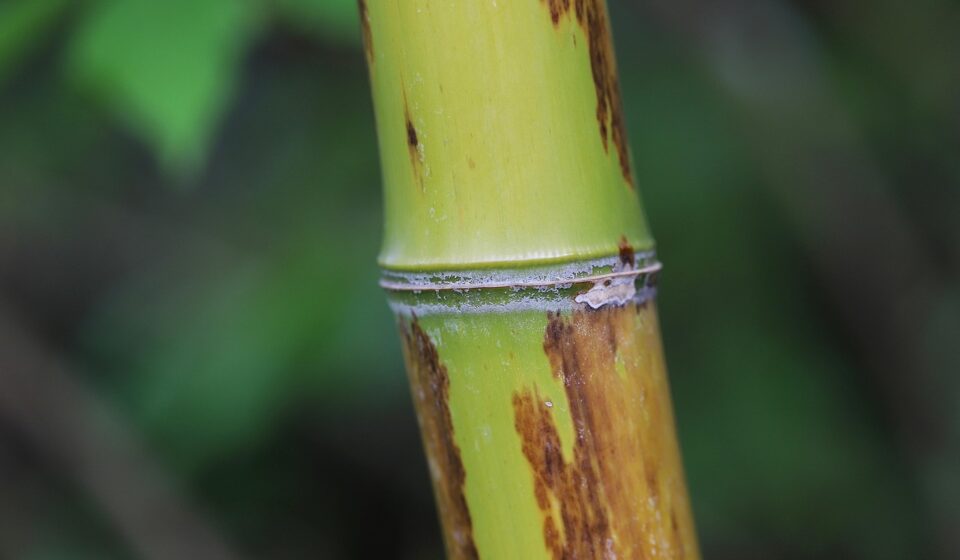
Bamboo is often discussed like wood, but botanically it is a woody grass. The Food and Agriculture Organization describes bamboo as a long-used non-wood forest product, with more than 1,600 species distributed across tropical, subtropical and mild temperate zones. In furniture, however, the material name alone rarely tells the full story. A product labeled bamboo may be made from round culms, laminated strips, a bamboo veneer over a composite core, compressed strand material, or a mix of bamboo with rattan, metal, plywood or MDF.
That distinction matters because each construction behaves differently. A round bamboo chair may show the natural nodes and hollow culm structure, but its durability depends heavily on joint quality and protection against cracking. A laminated bamboo desktop is closer to an engineered panel, where adhesive quality, board thickness and finish drive stability. A bamboo-look cabinet door may use bamboo only as a surface layer over another core material.
The best way to read a product page is to ask: what part of the furniture is bamboo, and what is the core? If the description only says “bamboo finish” or “bamboo style,” treat the bamboo as decorative until the seller provides more detail.
Where bamboo furniture performs well
Bamboo furniture is usually at its strongest in indoor spaces with stable humidity, moderate temperature and limited direct sun. Bedrooms, living rooms, dining rooms and home offices are common fits because spills can be managed and the furniture is not constantly exposed to steam, rain or standing water.
Design flexibility is one practical advantage. Laminated bamboo panels can create clean, modern surfaces, while round or woven bamboo can give a room a warmer and more relaxed look. Bamboo also pairs well with black metal frames, light upholstery, stone-colored interiors and minimalist storage designs. In smaller rooms, its pale tone can feel lighter than many dark hardwoods.
For everyday use, bamboo is best compared with other engineered natural materials rather than treated as a direct substitute for every hardwood. A well-made bamboo dining table may serve a household well, but its performance still depends on thickness, edge treatment, leg attachment, surface coating and care. A poorly made bamboo product can fail for the same reasons any furniture can fail: weak joinery, thin panels, poor sealing, low-quality fasteners or inadequate instructions.
| Use case | Suitability | What to check |
|---|---|---|
| Bedroom furniture | Usually suitable | Panel thickness, drawer slides, finish uniformity and indoor care instructions |
| Living room tables and shelving | Usually suitable | Weight rating, edge sealing, leg stability and scratch resistance expectations |
| Dining furniture | Suitable with care | Water-resistant finish, heat protection advice and wipe-clean surface |
| Bathroom storage | Use caution | Ventilation, sealed edges and whether the maker approves humid-room use |
| Outdoor patio furniture | Use only if rated | Outdoor finish, drainage, UV exposure limits, cover guidance and warranty language |
Limits buyers should not ignore
The biggest misunderstanding is that bamboo furniture is naturally ready for any wet or sunny environment. Bamboo can be resilient, but finished furniture remains sensitive to moisture movement, surface damage and biological deterioration if it is not properly processed and protected. Outdoor conditions add rain, ultraviolet light, temperature swings and dirt accumulation, all of which put more stress on finishes and joints.
Moisture risk shows up in several ways. Unsealed edges can absorb water faster than broad finished faces. Steam-heavy rooms can encourage swelling or finish breakdown. A plant pot, wet towel or glass left on a surface can leave marks if the finish is not robust. In dry climates, rapid humidity changes may contribute to checking or small cracks, especially in furniture made from round culms.
Repairability is another limit. Some bamboo boards and veneers can be lightly sanded and refinished, but thin veneers over composite cores may not tolerate aggressive sanding. Strand or laminated materials can also have distinctive grain patterns that are difficult to blend after a deep scratch. Before buying a large table or cabinet, check whether the seller provides repair guidance and whether the surface is a replaceable veneer, a thick laminated board or a coated panel.
Finally, not every sustainability claim carries the same weight. Fast growth is a useful starting point, not complete proof. Plantation management, chemical inputs, adhesive systems, factory controls, transport distance and chain-of-custody documentation all affect the final environmental profile.
Common bamboo furniture materials compared
Because the word “bamboo” covers several product types, comparison is the most useful buying tool. The table below outlines the common forms shoppers are likely to see.
| Material form | How it is used | Main strengths | Main cautions |
|---|---|---|---|
| Round bamboo culm | Chairs, accent tables, screens, frames and decorative shelving | Natural appearance, light weight and distinctive nodes | Joint quality, cracking, pest protection and finish coverage are critical |
| Laminated bamboo board | Tabletops, desktops, cabinets, shelves and bed components | Cleaner dimensions, modern look and good panel utility | Depends on adhesive quality, edge sealing and panel thickness |
| Bamboo veneer over a core | Cabinet doors, flat-pack furniture and decorative panels | Bamboo appearance at lower material use | Core material and emission compliance matter as much as the surface |
| Strand-woven or densified bamboo | Hardwearing surfaces, flooring-style panels and some furniture parts | Dense feel and strong surface potential | Can be heavy, resin-dependent and hard to repair invisibly |
| Woven bamboo or bamboo-rattan mix | Chair seats, baskets, headboards and accent pieces | Texture, ventilation and handmade visual character | May sag, loosen or fray if overloaded or exposed to damp conditions |
For load-bearing furniture, judge the whole structure. A thick bamboo top on weak legs is still weak furniture. A woven panel in a humid bathroom can still deteriorate if the room lacks ventilation. The best products use bamboo in a form that matches the job the furniture must perform.
Sustainability, sourcing and indoor air questions
Bamboo’s environmental reputation is partly deserved and partly oversimplified. FAO and INBAR have highlighted bamboo and rattan as fast-renewing resources with roles in rural income, land restoration and alternatives to some timber and high-emission materials. FAO has also reported that bamboo can grow extremely quickly under suitable conditions, with some species capable of growth up to a meter in a day. That does not mean every bamboo furniture product has the same footprint or the same traceability.
Certification deserves careful reading. FSC has identified integrity risks in some bamboo supply chains, including false or unsupported certification claims in parts of the manufacturing segment. For a buyer, the lesson is not to reject bamboo; it is to verify claims. If a product says FSC-certified, ask for the certificate code or product-level documentation rather than relying on a badge in an image.
Indoor air quality is another practical issue. The U.S. Environmental Protection Agency explains that bamboo used in composite wood products may fall under formaldehyde emission rules when it meets definitions for products such as MDF, particleboard or certain hardwood plywood constructions. In plain terms, if bamboo furniture uses a composite core, adhesive-bonded panels or veneers over MDF or particleboard, emission compliance should be part of the buying checklist. See also: Building Materials.
Look for clear language such as TSCA Title VI compliance for U.S. composite wood products, CARB compliance where relevant, no-added-urea-formaldehyde claims only when documented, and third-party certificates that identify the product or material rather than only the brand. Claims should be specific enough for a consumer to understand what was tested or certified.
A practical checklist before buying
Before purchasing, compare the bamboo piece with the same discipline you would use for wood, plywood or metal furniture. For more furniture and materials decisions, the Buying Guides section can help you evaluate products beyond surface descriptions.
- Identify the construction. Is it round bamboo, laminated bamboo, veneer, strand-woven material or a mixed-material product?
- Check the core. If the product uses MDF, particleboard or plywood, ask about emission compliance and surface thickness.
- Match it to the room. Use bamboo confidently in dry indoor rooms and cautiously in bathrooms, kitchens, sunrooms and patios.
- Read the finish details. Look for sealed edges, wipe-clean coating, UV guidance and specific care instructions.
- Inspect joinery. For chairs, beds and tables, strong hardware, reinforced joints and stated weight limits matter more than material claims.
- Ask about certification. Sourcing claims should be traceable to a product, material batch or certificate, not only a general brand statement.
- Review maintenance. Good bamboo furniture should come with clear instructions for cleaning, spill response, humidity and outdoor storage if applicable.
- Consider repairability. Ask whether scratches can be sanded, whether parts are replaceable and whether the finish can be renewed.
- Check return and warranty terms. Short or vague warranty language can be a warning sign for furniture promoted for heavy use or outdoor exposure.
If two bamboo pieces look similar, choose the one that provides clearer construction details, documented compliance and realistic care advice. Transparency is often a better quality signal than a long list of green-sounding claims.
Care tips that extend service life
Most bamboo furniture benefits from simple, consistent care. Dust with a soft cloth, wipe spills quickly and avoid leaving wet items on the surface. Use coasters, trays and placemats on dining tables, desks and nightstands. Keep furniture away from persistent dampness, direct heat sources and harsh sunlight unless the maker states that the finish is designed for those conditions.
For humid rooms, ventilation matters more than occasional cleaning. A bamboo shelf beside a shower faces a different moisture load from a bamboo dresser in a bedroom. If condensation appears on mirrors or walls every day, bamboo furniture with unsealed edges or woven details may age faster.
For outdoor-rated bamboo, follow the maker’s cover, cleaning and resealing schedule. Do not assume that a covered porch and an uncovered patio create the same exposure. Rain splash, standing water at the feet, pollen, salt air and direct afternoon sun can all shorten finish life. Store cushions separately and raise furniture slightly if water can collect under the legs.
Frequently asked questions
Is bamboo stronger than wood?
It depends on the bamboo form and the wood being compared. Bamboo has useful strength characteristics, but furniture performance depends on design, moisture control, lamination quality, joinery and finish. A well-made bamboo panel can outperform a weak wood product, while a poorly made bamboo chair can fail sooner than a well-built hardwood chair.
Is bamboo furniture waterproof?
No. Bamboo furniture should not be treated as waterproof unless the maker specifically rates it for wet or outdoor use. Even then, the finish and maintenance schedule are important. Most bamboo pieces are better described as suitable for controlled indoor conditions rather than constant moisture exposure.
Is bamboo furniture sustainable?
It can be, but the claim needs context. Bamboo is fast-renewing and widely used in many industries, but sustainability also depends on plantation practices, processing, adhesives, transport, durability and traceable certification. Look for product-specific documentation rather than broad marketing language.
Does bamboo furniture contain formaldehyde?
Raw bamboo culms are different from adhesive-bonded panels. Furniture made with bamboo veneer, laminated boards, MDF, particleboard or plywood may involve resins or composite cores. For U.S. buyers, TSCA Title VI compliance is a useful check when bamboo is part of a regulated composite wood product.
Can bamboo furniture be refinished?
Some bamboo furniture can be refinished, especially thicker laminated pieces, but thin veneers and some coated panels may not allow deep sanding. Before refinishing, confirm whether the bamboo layer is thick enough and test any cleaner, oil or finish in a hidden area.
Bottom line
Bamboo is worth considering when you want furniture with a natural look, modern lines and a renewable-material story. It is strongest as an indoor furniture choice when the construction is clear, the finish is well specified and the seller provides realistic care guidance. It is riskier in wet rooms or outdoor spaces without explicit rating and maintenance instructions.
The smartest approach is to buy bamboo furniture by specification, not by slogan. Confirm the material form, core, finish, compliance, certification and room suitability before comparing price. When those details check out, bamboo can be a durable and attractive part of a well-planned home.