Floating pallet bed frame buying guide for safer bedroom projects
a[data-rs-seo-link]{text-decoration:underline!important;color:#1a56db!important;cursor:pointer!important;}a[data-rs-seo-link]{text-decoration:underline!important;color:#1a56db!important;cursor:pointer!important;}
What a floating pallet bed frame is and when it makes sense
A floating pallet bed frame is a low platform bed made with pallet-style slats or reclaimed pallet boards, with the main support base set back or concealed so the mattress appears to hover above the floor. It can work well when a project calls for a rustic-modern look, a lower sleeping height, and a frame that can be customized to the room. The buying decision, however, should not stop at the minimal appearance. The frame still needs safe wood, adequate structural support, clean finishing, and proper mattress ventilation. If you are comparing bedroom furniture options, start with the same practical questions used in any buying guide: what size must it support, what materials are used, how is it assembled, and what maintenance will it need?
The floating effect is usually created in one of three ways: a recessed plinth under the center of the bed, inset legs set back from the edges, or a metal or timber subframe hidden behind an overhanging pallet deck. That design choice matters because the most attractive option is not always the strongest. A wide overhang may look clean in photos, but it also increases leverage on the hidden base. A good frame should feel rigid when you sit on the edge, should not twist when pushed from the side, and should not depend on the mattress to keep the platform square.
Key buying criteria before you pick a frame
The safest way to evaluate a floating pallet bed frame is to treat it as both furniture and a small structural project. A standard decorative bed frame may hide weaker details because the side rails, headboard, and legs are visible. A floating frame hides much of the structure, so the underside deserves close inspection.
| Decision point | What to check | Why it matters |
|---|---|---|
| Wood source | Clear pallet markings, clean boards, no stains, no chemical odor, no rot | Reclaimed pallet wood can carry contamination from storage, spills, or unknown prior use |
| Support layout | Center rail, cross braces, enough legs or a continuous recessed base | The floating look should not rely on a few screws or unsupported pallet boards |
| Mattress fit | Frame dimensions matched to the actual mattress, not just the size name | Mattress size names vary slightly by maker, and poor fit can create edge gaps or overhang |
| Slat spacing | Even support with no large gaps and no warped slats | Uneven support can affect comfort and may conflict with mattress warranty requirements |
| Finish | Sanded edges, sealed wood, countersunk fasteners | Pallet boards can splinter, snag bedding, or expose nail heads if left unfinished |
| Ventilation | Air gaps under the mattress and around the frame | Mattresses need airflow, especially in humid rooms or on low platforms |
Choose the right size before choosing the look
Do not rely on product photos alone. Measure the actual mattress first, then compare it with the frame deck. The International Sleep Products Association mattress reference commonly lists U.S. sizes such as twin at about 38 by 74.5 inches, full at about 53 by 74.5 inches, queen at about 60 by 79.5 inches, and king at about 76 by 79.5 inches. These figures are useful for planning, but the mattress in the room should be the final reference because manufacturers can use slightly different tolerances.
For a floating pallet look, the full mattress footprint still needs proper support. A small visual reveal is usually manageable, but a mattress that hangs unsupported beyond the frame edge can break down at the perimeter. If the frame includes a headboard or side shelf, confirm the total room footprint as well as the sleep surface size. A low floating base can make a small room feel wider, while a pallet platform that extends too far beyond the mattress can become a toe-stub hazard in tight walkways.
Look for a real load path, not just thick boards
Thick boards alone do not make a bed frame strong. Load needs to move from the mattress to the slats, then to rails, then to legs or a recessed base, and finally to the floor. A sound design will have continuous support along the sides and center, bracing against side-to-side movement, and fasteners sized for structural use rather than light trim. If a seller provides a stated weight capacity, check what it includes. Ideally, it should account for the mattress, sleepers, bedding, and normal movement such as sitting on the edge.
For a DIY project, avoid building the entire deck from loose pallet planks alone. Pallet boards are often thin, split easily, and may have previous nail damage. A stronger approach is to use pallet boards as the visible top layer while the hidden structure uses sound dimensional lumber or a metal frame. This gives the bed the reclaimed look without asking old pallet boards to carry all of the structural load.
How to judge pallet wood quality and safety
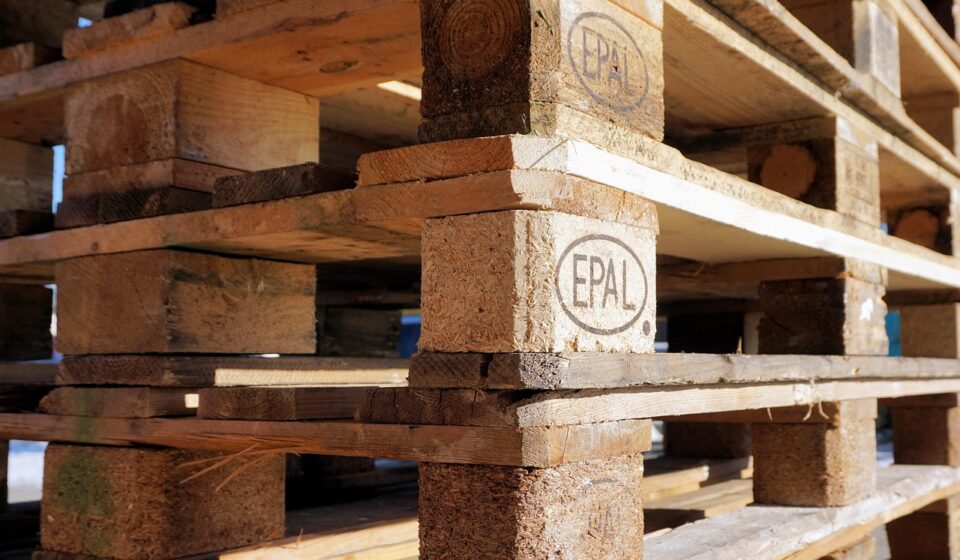
Pallet wood is the part of this project that needs the most caution. The U.S. Department of Agriculture Animal and Plant Health Inspection Service describes official labeling programs for heat-treated and methyl bromide fumigated wood packaging material under ISPM 15. In practical buying terms, heat-treated pallets are commonly marked with HT, while methyl bromide fumigation is identified by MB. For bedroom furniture, clean heat-treated material is generally preferred, and pallet wood marked MB should be avoided for indoor furniture projects.
Markings are only one part of the decision. A pallet may have been safe when manufactured but later used in dirty or unknown conditions. Reject pallets with oil stains, chemical smell, mold, heavy water damage, pest activity, cracked stringers, or unknown powdery residue. Also avoid pallets from industrial yards, food spill areas, or locations where you cannot identify what they carried. If you cannot verify the source, buying new pallet-style lumber or a finished bed frame may be the safer option.
Reclaimed pallets versus new pallet-style frames
Reclaimed pallets are appealing because they are inexpensive and give each bed a unique texture. The tradeoff is labor and uncertainty. You may spend hours removing nails, checking boards, sanding splinters, cutting away damaged sections, and sorting usable pieces. New pallet-style frames cost more, but they can offer cleaner wood, straighter boards, predictable dimensions, and clearer assembly instructions.
A middle option is to build the structural frame from new lumber and use selected reclaimed pallet boards only as decorative cladding on visible areas. This reduces risk because the old wood is not carrying the main load. It also makes it easier to replace a damaged board later without dismantling the entire bed.
Mattress support, airflow, and bedroom comfort
A floating pallet bed frame should support the mattress evenly while allowing air to move. Pallet-style frames often use slats, which can help airflow, but the slats must be flat, smooth, and close enough together for the mattress type. Foam and hybrid mattresses often need more continuous support than older innerspring mattresses. Before buying or building, check the mattress manufacturer’s foundation requirements because warranty terms may specify slat spacing, center support, or the type of foundation allowed.
Airflow is especially important in low-profile beds. A mattress placed close to the floor can trap moisture in humid climates, basement bedrooms, or rooms with poor ventilation. Keep the bed slightly elevated, avoid sealing the entire underside with a solid panel, and leave room around the frame for cleaning. If you use an area rug under the bed, make sure it does not block the recessed support base or create an uneven surface that causes rocking.
Plan for edge comfort and daily use
Many floating bed photos focus on the front corner, but daily comfort depends on details users feel rather than see. The edge should be strong enough for sitting while putting on shoes. Corners should be rounded or softened. The top surface should not have raised screw heads, protruding staples, or unfinished knots that can catch sheets. If the frame is very low, consider whether it will still be comfortable for getting in and out of bed, especially for taller users, older adults, or anyone with knee or back concerns.
Under-bed lighting can enhance the floating effect, but it should be treated as an accessory rather than a structural feature. Use low-heat lighting designed for furniture applications, route wires where they cannot be pinched, and keep power supplies accessible. Do not let lighting distract from checking the wood, support base, and hardware. See also: Building Materials.
Indoor air quality and finish considerations
Some floating pallet bed frames include plywood, MDF, particleboard, or laminated panels as part of the hidden deck or storage base. The U.S. Environmental Protection Agency identifies hardwood plywood, medium-density fiberboard, and particleboard as regulated composite wood products under TSCA Title VI formaldehyde standards. If a frame uses composite panels, look for documentation that the panels comply with applicable U.S. formaldehyde emission requirements. This is especially relevant for bedroom furniture because people spend long periods close to the material.
For solid wood pallet boards, finishing is still important. Sand rough faces progressively, remove old fasteners, fill sharp cracks only where appropriate, and seal the surface with a finish suitable for indoor furniture. Water-based low-odor finishes are often easier to live with in a bedroom, but follow the product curing instructions before placing a mattress on the frame. A finish that feels dry to the touch may still need additional cure time before bedding blocks airflow over the surface.
Do not burn, heavily plane, or aggressively sand unknown pallet wood without dust control. Reclaimed boards can contain dirt, residues, embedded grit, and hidden metal fragments. Wear eye protection and a respirator when cutting or sanding, and use a magnet or metal detector to check for broken nails. The cleaner and more predictable the finished bed needs to be, the more sense it makes to buy new lumber for the parts that contact the mattress and bedding.
What to avoid when buying a floating pallet bed frame
Several red flags should make you pause before buying a finished floating pallet frame or committing to a DIY plan. Avoid listings that show only styled photos and do not show the underside, support base, or joinery. Avoid frames that describe themselves as heavy duty without explaining the construction method. Avoid designs with a large cantilever on all sides and only a small center block underneath unless the maker explains how the frame is engineered to resist tipping and flexing.
- Avoid unknown pallet wood for a child’s bed or a poorly ventilated bedroom.
- Avoid pallet boards with MB markings, chemical stains, mold, or strong odors.
- Avoid frames that depend on glue alone for structural joints.
- Avoid wide slat gaps unless the mattress maker specifically allows them.
- Avoid sharp unfinished corners, exposed nail holes, and raised fasteners.
- Avoid adapting the design into a loft bed or bunk bed without a compliant, purpose-built structure.
The last point matters because a floating platform bed is not the same as a bunk bed. The U.S. Consumer Product Safety Commission enforces mandatory rules for bunk beds under 16 CFR Parts 1213 and 1513, with requirements intended to reduce entrapment and fall hazards. A pallet-style platform should stay close to the floor unless it is designed and tested for elevated use.
Simple buying decision framework
If you want the look with the least uncertainty, choose a new pallet-style platform from a seller that shows underside photos, published dimensions, assembly instructions, and material details. If you want the sustainability story of reclaimed wood, choose a hybrid build with new structural lumber and carefully selected pallet boards as the visible finish. If you want the lowest material cost, a full DIY reclaimed pallet frame is possible, but only when you can verify the pallet source, inspect every board, and build a real hidden support system.
- Measure the mattress and bedroom path before choosing a size.
- Decide whether reclaimed wood is worth the extra sorting and finishing work.
- Confirm the support design, not just the top appearance.
- Check pallet stamps and reject questionable boards.
- Match slat spacing and center support to the mattress requirements.
- Finish the wood thoroughly before bringing bedding into contact with it.
The best floating pallet bed frame for most bedrooms is not the most dramatic overhanging design. It is the one that balances the floating look with a stable base, known materials, smooth finishing, and enough airflow to keep the mattress comfortable over time.
Frequently asked questions
Is a floating pallet bed frame safe?
It can be safe if the structure is properly built, the wood is clean and suitable for indoor use, and the mattress is fully supported. The main risks are weak hidden supports, unknown pallet contamination, splinters, exposed fasteners, and poor airflow.
What pallet marking should I look for?
For reclaimed pallet projects, HT indicates heat treatment under the common ISPM 15 marking system. Avoid MB-marked pallets for bedroom furniture because MB refers to methyl bromide fumigation. Also reject any pallet that is stained, moldy, broken, or of unknown use history.
Can I put a foam mattress on a pallet bed frame?
Often yes, but only if the support is even and the slat spacing meets the mattress manufacturer’s requirements. Foam mattresses can sag into large gaps, so check the warranty or foundation instructions before using a pallet-style deck.
Does a floating bed need a center support?
Most full, queen, and king designs should have center support or an equivalent hidden base. The wider the mattress, the more important it is to prevent sagging and twisting. A floating appearance should come from recessed support, not from missing support.
Is it better to buy new or use reclaimed pallets?
New pallet-style lumber is usually cleaner, straighter, and easier to finish. Reclaimed pallets can work for decorative surfaces, but they require careful inspection and more preparation. For many bedrooms, a hybrid design offers the best balance of character and reliability.