Steel building materials in modern construction and how to choose them
a[data-rs-seo-link]{text-decoration:underline!important;color:#1a56db!important;cursor:pointer!important;}a[data-rs-seo-link]{text-decoration:underline!important;color:#1a56db!important;cursor:pointer!important;}
Why steel remains a practical building material
Steel building materials are used across many project types because they offer high strength, predictable engineering behavior, dimensional consistency and broad market availability. They are not one single product category. On a building project, steel may appear as hot-rolled beams and columns, cold-formed framing, metal deck, reinforcing bar, roof and wall panels, lintels, fasteners, connectors and specialty components.
The right choice depends on the load path, span, exposure, fire rating, corrosion risk, local code adoption, fabrication capacity and the project’s carbon goals. For owners and specifiers, the useful question is not whether steel is good or bad. It is where steel adds measurable value, and where another material or a hybrid system may perform better.
Published guidance from the World Steel Association, the International Code Council, the American Institute of Steel Construction and the American Iron and Steel Institute points to a consistent view: steel is highly standardized, recyclable and versatile, but its performance depends on correct design, detailing and installation.
What counts as steel building materials
The phrase steel building materials covers both primary structural members and smaller products that support the building envelope, interiors and services. In practice, it is more useful to separate them by function than by appearance.
| Material category | Typical building role | Key specification checks |
|---|---|---|
| Hot-rolled structural steel | Beams, columns, braces, frames and long-span systems | Grade, section size, connection design, fabrication tolerances, fire protection and coating system |
| Cold-formed steel framing | Wall studs, floor joists, trusses, non-load-bearing partitions and light-frame systems | Thickness, coating designation, stud spacing, bracing, screw schedule and moisture control |
| Steel deck | Floor and roof platforms, often paired with concrete or insulation assemblies | Deck profile, span, diaphragm requirements, fastening pattern, acoustic and fire rating needs |
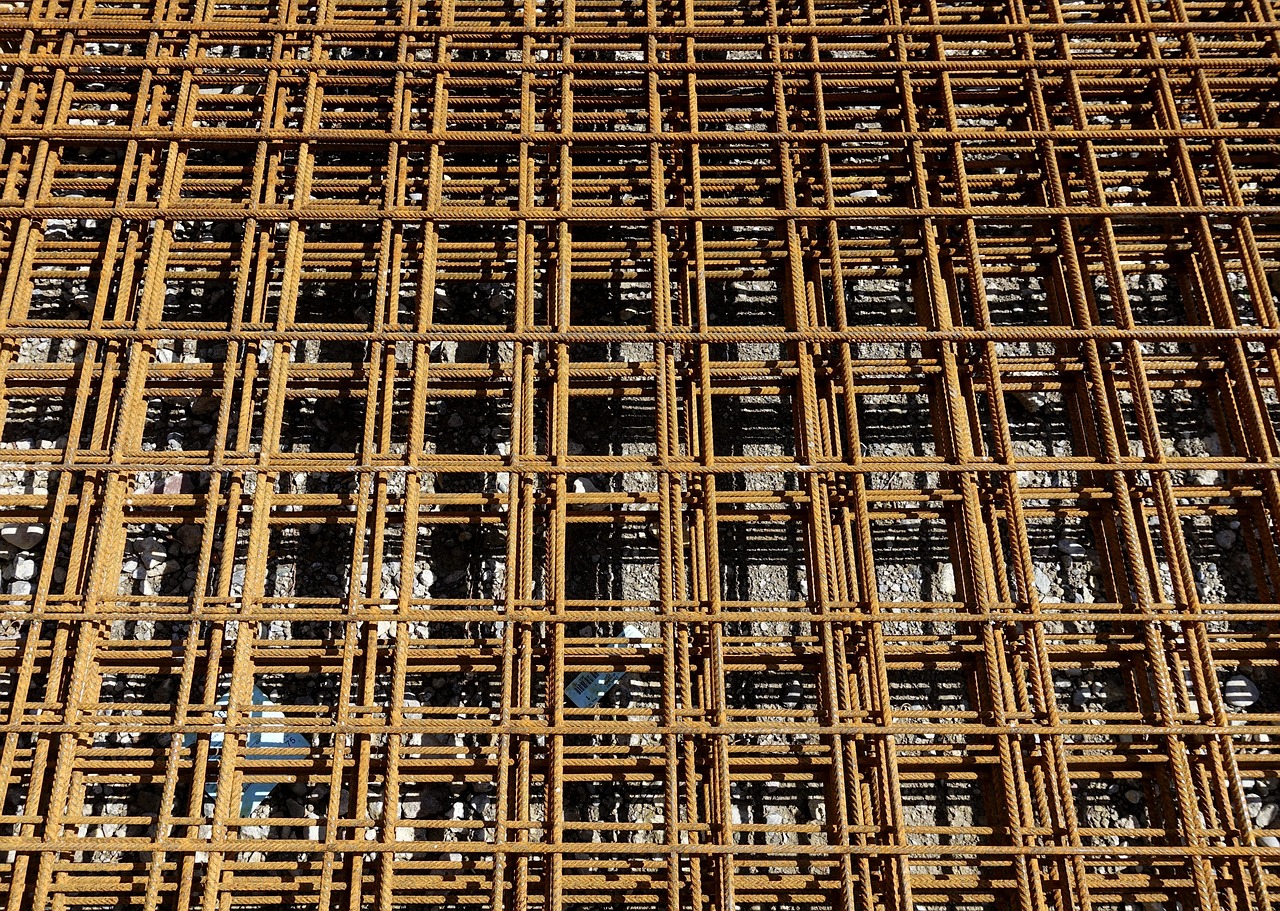
| Reinforcing steel | Concrete slabs, beams, columns, walls and foundations | Bar size, grade, placement, cover, splice length and corrosion exposure |
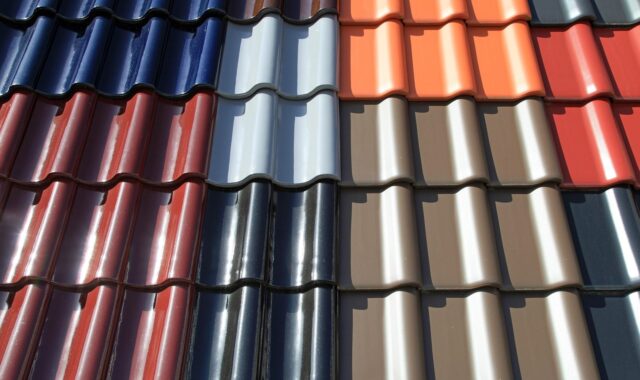
| Metal panels and accessories | Roofing, cladding, flashings, trims and rainscreen systems | Panel profile, substrate, coating, drainage plane, thermal movement and compatible fasteners |
This distinction matters because each product category is designed under different assumptions. A hot-rolled beam and a cold-formed wall stud may both be steel, but they are not interchangeable. Their thickness, forming process, connection behavior and governing standards are different.
Where steel works best in building design
Steel is often most valuable when strength, span, speed or future adaptability affects the project economics. Multi-story commercial buildings use structural steel because frames can be fabricated off site, erected quickly and modified more easily than many monolithic systems. Warehouses and industrial buildings benefit from long-span framing, large openings and compatibility with overhead doors, cranes and mechanical systems.
Cold-formed steel is common in light-gauge framing, interior partitions, mid-rise residential projects, schools, hotels and panelized wall assemblies. It is dimensionally stable, noncombustible and not a food source for termites or mold. Those advantages are useful, but they do not remove the need for water management. Galvanized coatings, drainage, ventilation and separation from incompatible materials remain essential.
Steel deck is a good example of steel’s role in hybrid construction. It usually works with concrete, insulation, membranes and fire-rated assemblies rather than standing alone. A steel frame can reduce member size and support long spans, while the final performance of the floor or roof depends on the full assembly.
For more context on material categories and specification issues, the Building Materials section can help readers compare steel with other construction products.
Codes and standards that shape steel selection
Steel construction is heavily standardized. In the United States, Chapter 22 of the 2024 International Building Code addresses steel construction and covers structural steel, composite steel and concrete construction, cold-formed steel, steel joists, steel deck, metal building systems, steel storage racks and related systems. The code also points designers toward recognized technical standards instead of treating all steel products as one broad category.
For structural steel buildings, ANSI/AISC 360-22 is a central specification in current U.S. practice. AISC 303-22 addresses the code of standard practice for steel buildings and bridges. For cold-formed steel framing, AISI S240-20 is an important North American standard. These references define design methods, responsibilities, tolerances and quality expectations. They also show why steel selection should involve licensed design professionals whenever structural performance is involved.
Local adoption is an important limitation. A model code may be published nationally, but states, provinces or municipalities can adopt it on different schedules and with amendments. A material that is acceptable in one jurisdiction may require different documentation, inspection or fire-resistance detailing in another. Before procurement, teams should confirm the governing building code edition, referenced standards, special inspection requirements and submittal expectations.
Sustainability claims need careful reading
Steel has clear circular-economy advantages. The World Steel Association describes steel as fully recyclable, and its magnetic properties make it relatively easy to recover from mixed waste streams. The same association has estimated the recovery rate for steel in construction at about 85 percent. These are meaningful advantages for projects where end-of-life recovery, reuse potential and material traceability are part of the sustainability plan.
Recyclability, however, is not the same as low embodied carbon. Steel production can be energy intensive, and the impact varies by production route, electricity mix, scrap content, transport distance and product type. A beam, deck panel and light-gauge stud can have different environmental profiles. Procurement teams should avoid broad claims such as green steel unless the claim is supported by project-specific documentation.
A more reliable approach is to request environmental product declarations, mill certificates and product data that identify the material, production route and declared life-cycle boundary. EPDs are especially useful when a project compares materials on a cradle-to-gate basis or when a rating system asks for product transparency. They do not automatically prove that one product is the lowest-impact option, but they make comparisons more disciplined. See also: Buying Guides.
Design efficiency also affects sustainability. A lighter frame, optimized member sizes, reusable connections, reduced fabrication waste and accurate digital coordination can all lower total material demand. In many cases, the most sustainable steel strategy is not simply choosing recycled content. It is using no more steel than the design genuinely requires while preserving safety, durability and code compliance.
Performance risks that should not be overlooked
Steel is durable, but it is not maintenance-free. Corrosion is the most obvious risk. Interior dry framing may need only standard protective coatings, while coastal, industrial or high-humidity environments can require heavier galvanizing, specialized paint systems, stainless components or careful separation between dissimilar metals. Drainage details and envelope performance are often as important as the coating itself.
Fire performance is another project-specific issue. Steel is noncombustible, but its strength can be reduced at elevated temperatures. Depending on occupancy, height, construction type and fire-resistance rating, structural members may need spray-applied fire-resistive material, intumescent coating, encasement or other tested assemblies. The correct answer comes from the code analysis and approved fire-rated design, not from the steel material alone.
Connections can determine whether the system performs as designed. Bolts, welds, screws, anchors and clips transfer loads between members. Poorly coordinated connections can create field delays, water traps, thermal bridges or unintended load paths. For cold-formed steel, bracing and screw patterns are especially important because thin members can buckle or distort if they are not detailed and installed as designed.
Market conditions also matter. Steel pricing and lead times can move quickly because they are affected by raw materials, energy costs, tariffs, mill capacity and transportation. A design that is economical at the schematic stage may need revision if section availability changes. Early coordination with fabricators and suppliers can reduce redesign risk.
How to choose steel building materials for a project
A practical selection process starts with performance requirements rather than product preference. The following checklist can help keep the discussion focused:
- Define the load path. Identify which steel components are primary structural elements, secondary supports, envelope components or accessories.
- Confirm the governing code. Check the adopted building code, referenced standards and any local amendments before final specification.
- Match the product to exposure. Interior dry spaces, exterior walls, roofs, parking structures and coastal sites need different corrosion strategies.
- Review fire-resistance needs. Determine whether the steel is part of a rated assembly and what protection method is approved.
- Coordinate connections early. Align structural drawings, shop drawings, penetrations, façade attachments and mechanical supports.
- Request transparent documentation. Use mill certificates, product data, coating information and EPDs where sustainability or traceability is important.
- Consider fabrication and erection limits. Member length, site access, crane reach, sequencing and tolerance requirements can affect cost as much as material price.
This checklist is not a substitute for engineering, but it helps owners and project teams ask better questions. Steel performs best when design, procurement, fabrication and installation are treated as one connected process.
Frequently asked questions
Are steel building materials always more expensive than wood or concrete?
No. Cost depends on region, building type, labor market, lead time, fire rating, span, foundation design and finishing requirements. Steel may have a higher material cost in one comparison but reduce schedule time, member depth or future modification costs in another.
Is cold-formed steel the same as structural steel?
No. Cold-formed steel is made from thinner sheet steel formed at room temperature and is commonly used for studs, joists, trusses and light-frame assemblies. Structural steel usually refers to heavier hot-rolled shapes used for primary frames, beams, columns and braces.
Can steel be used in residential construction?
Yes. Steel appears in residential projects as beams, lintels, connectors, roofing, cladding, stair components and cold-formed framing. Its suitability depends on structural design, thermal detailing, corrosion protection, local code requirements and installer experience.
Does recycled steel mean a building has low embodied carbon?
Not automatically. Recycled content helps, but embodied carbon also depends on production route, energy source, product type, transport and design efficiency. EPDs and project-specific quantities give a more reliable picture than recycled-content claims alone.
What is the biggest mistake when specifying steel materials?
The biggest mistake is treating steel as a generic commodity. Grade, coating, connection design, fire protection, exposure class, tolerances and documentation all affect performance. The safest approach is to specify by system requirements and verified standards, not by product name alone.