Furniture design in 2026 favors flexibility, healthier materials, and warmer forms
a[data-rs-seo-link]{text-decoration:underline!important;color:#1a56db!important;cursor:pointer!important;}a[data-rs-seo-link]{text-decoration:underline!important;color:#1a56db!important;cursor:pointer!important;}
What furniture design means now
Furniture design is no longer only a question of how a chair, table, sofa, cabinet, or bed looks. In 2026, the stronger question is how well a piece helps a room do more work without feeling crowded, how its materials affect indoor comfort, and whether its construction can hold up through years of use. Signals from Houzz, ASID, BIFMA, the U.S. EPA, the U.S. Bureau of Labor Statistics, and the U.S. Consumer Product Safety Commission point in a similar direction: good furniture needs to be flexible, comfortable, safer, more transparent, and visually warm. For homeowners, designers, retailers, and builders, that means evaluating function, scale, material evidence, repairability, and long-term fit, not just the appeal of a trend image.
The main forces shaping furniture design in 2026
Homes are doing more jobs
The multifunctional home remains one of the strongest pressures on furniture design. The U.S. Bureau of Labor Statistics reported in its American Time Use Survey released on June 25, 2026, that 35% of employed people did some or all of their work at home on days they worked in 2025. This does not mean every home needs a formal office. It does mean many rooms now have to shift between work, rest, storage, dining, exercise, and family use.
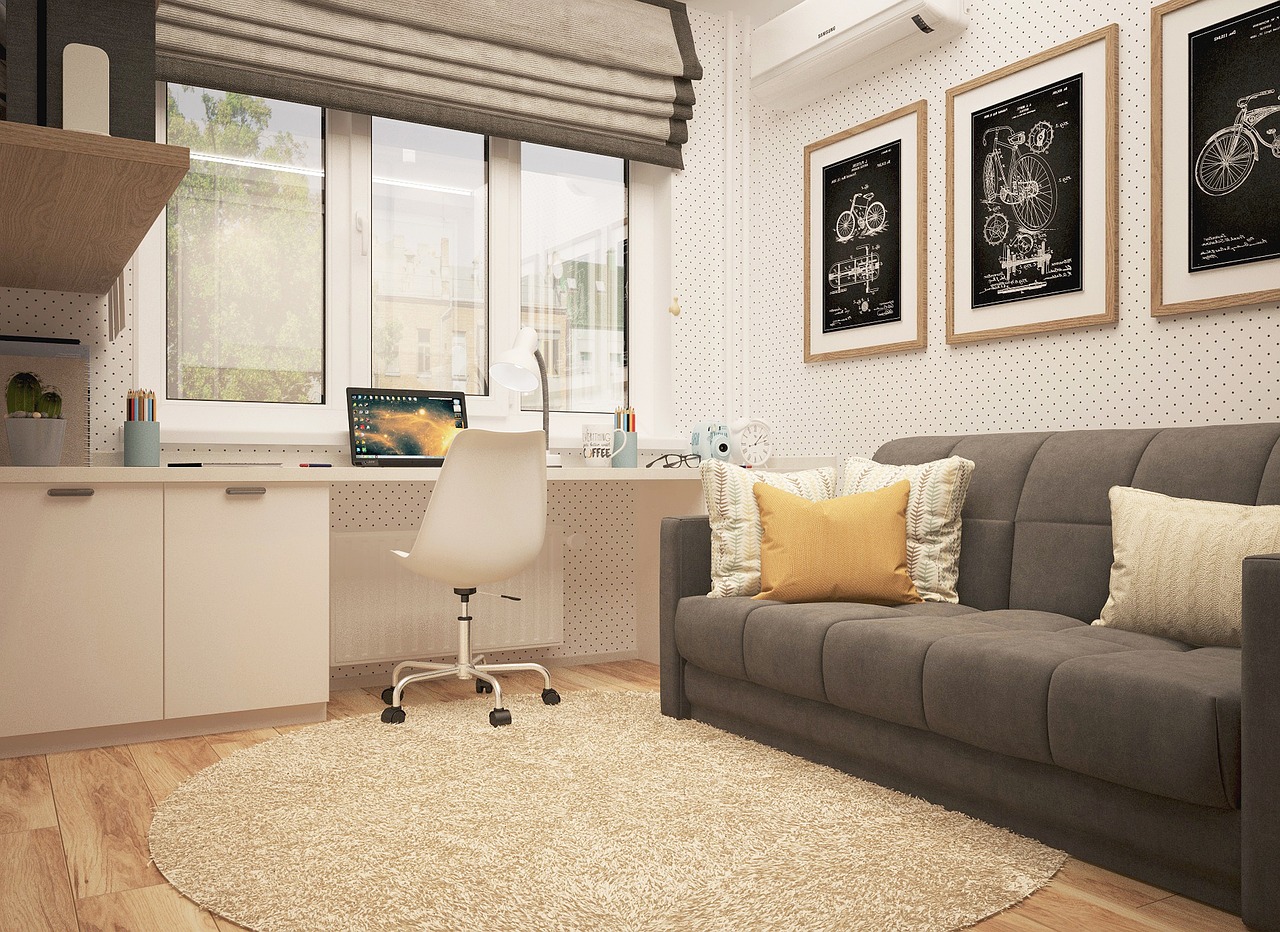
The effect is visible in product requirements. Desks are being designed to look less like office equipment and more like residential furniture. Dining tables need access to power or nearby charging without appearing technical. Upholstered seating has to be comfortable for long evenings while still supporting conversation or laptop use. Storage pieces are expected to hide work tools, toys, linens, and hobby supplies while keeping the room calm.
Comfort has become visual and tactile
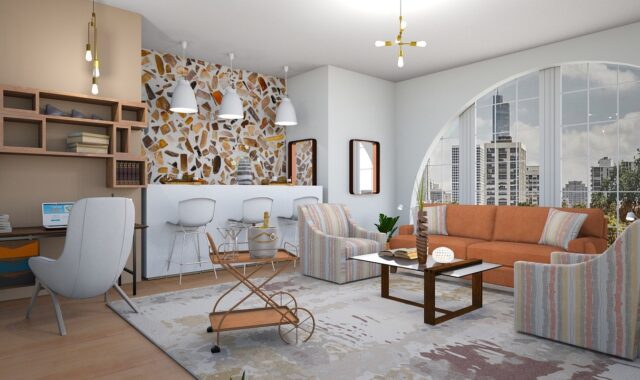
Houzz reported on May 20, 2026, that U.S. homeowners were searching more for curved forms, tactile textures, and warm color palettes. Its 2026 U.S. Emerging Summer Trends Report noted increased interest in rounded silhouettes, wave-like details, linen, seagrass, sandstone, terracotta, rust, chocolate brown, sage, taupe, and cream. Search activity does not prove that every homeowner wants the same style, but it does show a broader move away from cold, sharp minimalism toward furniture that feels softer to the eye and hand.
For furniture makers and buyers, this translates into rounded armrests, bullnose table edges, upholstered dining chairs, textured woven panels, fluted cabinet fronts, thicker rugs, and visible wood grain. The useful lesson is not to add curves everywhere. It is to use contrast with intent: a rectangular room can feel more relaxed with a rounded coffee table, while a room full of soft upholstery may need a crisp cabinet or slim metal frame for balance.
Sustainability is moving from style language to documentation
Sustainable furniture design used to be marketed largely through natural colors, reclaimed wood stories, and handmade aesthetics. Those cues can still matter, but they are not enough on their own. A more mature sustainability conversation now includes certification, product transparency, material sourcing, chemical content, durability, packaging, and end-of-life planning.
BIFMA announced that ANSI approved the revised ANSI/BIFMA e3-2024 Furniture Sustainability Standard on April 21, 2025. BIFMA describes LEVEL as a third-party certification program that evaluates the product, manufacturing facility, and responsible company against multi-attribute sustainability criteria. FSC, meanwhile, positions chain-of-custody certification as a way to verify that forest-based materials are tracked through the supply chain. For buyers, the practical point is clear: if sustainability matters, ask for evidence, not only a green label or a natural-looking finish.
A practical framework for better furniture design
Start with the job the piece must perform
A strong furniture design brief begins with behavior, not style. Who uses the piece? How often? For how long? What does it need to store, support, hide, move, or display? A good-looking console can fail if its drawers are too shallow for real household items. A sofa can look refined but disappoint if the seat depth is wrong for the users. A dining chair can photograph well and still become uncomfortable after twenty minutes.
The better sequence is function, size, construction, material, then style. In a living room, that may mean choosing seating depth before fabric color. In a bedroom, it may mean calculating drawer volume before selecting a dresser silhouette. In a small apartment, it may mean specifying nesting tables, stackable stools, or a lift-top table before buying purely decorative accent furniture.
Respect proportion and circulation
Furniture design succeeds when the object and the room support each other. Oversized pieces can look luxurious in a showroom and feel cramped in daily use. Undersized pieces can make a large room feel unresolved. Circulation is the practical test: people should be able to move naturally around the piece, open drawers or doors fully, and use adjacent seating without awkward body movement.
Proportion also affects perceived quality. A wide cabinet on thin legs may look elegant, but it still needs structural stability. A chunky sofa can feel comforting, but it needs enough visual lift to avoid making the room feel heavy. In open-plan homes, backs and sides matter as much as fronts because furniture is often seen from several directions.
Design for change
Furniture that can adapt is more valuable than furniture that solves only one current arrangement. Modular sectionals, replaceable slipcovers, adjustable shelves, reversible chaise units, extendable tables, and reconfigurable storage systems help a household respond to moving, renovation, children, pets, work shifts, or aging needs. Adaptability is not only a small-space strategy; it is also a durability strategy because useful furniture is less likely to be discarded.
Materials and construction choices that matter
Wood and engineered panels need different questions
Solid wood, veneer, plywood, particleboard, and medium-density fiberboard can all appear in well-designed furniture, but they are not interchangeable. Solid wood is often valued for repairability and long service life. Veneered panels can provide stability and use valuable species more efficiently. Engineered panels can help control cost and weight, but buyers should still ask about edge sealing, joinery, emissions, and load capacity.
The U.S. EPA identifies pressed wood products made with urea-formaldehyde resins as important potential sources of formaldehyde in homes. The agency specifically lists particleboard, hardwood plywood paneling, and medium-density fiberboard among pressed wood products used in cabinetry and furniture, and notes that medium-density fiberboard generally has the highest resin-to-wood ratio among these UF pressed wood products. This does not mean engineered panels should be rejected automatically. It means furniture specifications should include emissions, ventilation, and compliance questions, especially for enclosed storage, children’s rooms, and newly furnished spaces.
Upholstery and finishes affect everyday comfort
Upholstered furniture is often judged first by color and hand feel, but performance depends on fiber, weave, abrasion resistance, stain behavior, cushion composition, seam quality, and cleaning method. A pale linen-look fabric may support a calm design scheme, but a household with pets may need a washable slipcover or a tighter performance weave. Leather can age beautifully, but buyers need to understand grain type, coating, maintenance, and sunlight exposure.
Finishes deserve the same scrutiny. Low-odor does not always mean low-emission, and a single sustainability claim rarely describes the whole product. The EPA states that no federally enforceable standards have been set for VOCs in non-industrial settings. That makes third-party emissions testing, manufacturer documentation, and cautious ventilation after installation especially relevant when large quantities of new furniture, cabinetry, paint, flooring, or adhesives enter a home at the same time.
Durability is visible in the details
Durable furniture usually shows its quality in the details: joined corners instead of weak stapled assemblies, replaceable glides, reinforced drawer boxes, smooth hardware, removable cushion covers, stable bases, serviceable fasteners, and finishes that can be maintained. These details may not dominate a product photo, but they often decide whether a piece feels better or worse after five years of use.
Safety and standards are now design issues
Safety should be treated as part of furniture design, not as a warning label added at the end. The clearest example is clothing storage. The U.S. Consumer Product Safety Commission adopted ASTM F2057-23 as a mandatory safety standard under the STURDY law, with requirements applying to clothing storage units manufactured after September 1, 2023. The rule covers defined free-standing bedroom storage products and includes stability testing, child-weight simulation, anti-tip device packaging, and warning label requirements.
This matters because the design of a dresser, chest, or wardrobe affects risk. Height, drawer extension, loaded weight, rear feet, center of gravity, carpet behavior, and drawer interlocks can all influence stability. Responsible design combines attractive proportions with engineering and compliance. The same mindset applies to shelving, bunk beds, recliners, folding tables, and children’s furniture, even when different standards apply.
For commercial and institutional furniture, sustainability and performance expectations often overlap. BIFMA’s LEVEL program focuses on multi-attribute assessment, while other BIFMA standards address categories such as seating, desks, and storage. Residential buyers may not need contract-grade specifications, but the broader lesson is useful: credible furniture design can be measured, tested, and documented.
How to apply current trends without making rooms feel dated
The safest way to use a trend is to translate it into a design principle rather than copying a complete showroom look. Warm colors, curves, texture, and modularity can all age well when they solve a real problem in the room. They date quickly when they are layered without restraint.
| Current signal | Better design response | Common risk |
|---|---|---|
| Curved silhouettes | Use one or two rounded pieces to soften a room with many straight lines. | Too many curves can make the room feel themed. |
| Warm earthy colors | Choose grounding upholstery, wood, rugs, or accent finishes that work with existing surfaces. | Following one seasonal color too literally can limit future flexibility. |
| Tactile materials | Mix smooth, woven, matte, and grained surfaces for depth. | Highly textured surfaces may be harder to clean in busy homes. |
| Multifunctional living | Select storage, tables, and seating that change use without visual clutter. | Convertible furniture can feel compromised if comfort or stability is weak. |
| Sustainability claims | Ask for certification, sourcing, emissions, repair, and warranty information. | Natural styling can be mistaken for verified environmental performance. |
A checklist for homeowners, specifiers, and retailers
- Define the main use first. A piece that performs its daily job well will outlast a purely decorative purchase.
- Measure the room and movement paths. Include door swings, drawer extension, chair pull-back space, and delivery access.
- Ask what the frame, panels, foam, fabric, and finish are made from. Vague material descriptions make meaningful comparison difficult.
- Look for proof behind sustainability language. Useful evidence may include FSC certification, BIFMA LEVEL documentation, emissions testing, or repair information.
- Check safety requirements for the category. Dressers and other qualifying clothing storage units in the U.S. have specific stability requirements.
- Prioritize repairable and replaceable parts. Cushions, covers, glides, pulls, shelves, and hardware should not turn a minor issue into a discarded product.
- Balance trend and permanence. Use flexible accents for seasonal color, and reserve larger investments for proportions, materials, and forms that can work for years.
For more home materials and design coverage, readers can follow updates from Zunbeng.
Frequently asked questions
What is the difference between furniture design and interior design?
Furniture design focuses on the object itself: form, ergonomics, structure, materials, manufacturing, safety, and use. Interior design considers the whole space, including layout, lighting, finishes, circulation, acoustics, and how different pieces work together. The two overlap because a well-designed piece still has to fit the room.
What makes furniture design sustainable?
Sustainable furniture design considers sourcing, manufacturing impacts, chemical content, durability, repairability, packaging, transport, and end-of-life options. A recycled material or natural look can be positive, but it is only one part of the picture. Certification and transparent documentation make sustainability claims easier to evaluate.
Are curved furniture shapes just a trend?
Curves are a visible trend in 2026, but rounded forms are not new. They can remain useful when they improve comfort, soften hard architecture, or create safer edges in busy rooms. They are more likely to date when used only as a decorative theme without regard for proportion or function.
How can I choose healthier furniture for indoor air quality?
Ask about composite wood compliance, formaldehyde emissions, finish type, adhesive content, and third-party emissions testing where available. Ventilate after installing new furniture, especially when adding several new products at once. For sensitive spaces such as nurseries, bedrooms, and home offices, material documentation is more useful than a simple low-odor claim.
What should retailers emphasize when presenting furniture design in 2026?
Retailers should explain function, scale, materials, certifications, safety features, care, and repair options as clearly as style. Buyers are comparing furniture for real homes that may serve work, leisure, storage, wellness, and entertaining at the same time, so practical evidence can be as persuasive as visual inspiration.