Building materials explained for safer, durable and lower-carbon projects
a[data-rs-seo-link]{text-decoration:underline!important;color:#1a56db!important;cursor:pointer!important;}a[data-rs-seo-link]{text-decoration:underline!important;color:#1a56db!important;cursor:pointer!important;}
Why building materials now need a wider decision framework
Building materials are the products and raw substances used to create a building’s structure, envelope, interior systems and finishes. Specifying them well is no longer just a question of price or appearance. A sound material decision needs to account for structural performance, fire safety, moisture resistance, maintenance, availability, code compliance, embodied carbon and waste at the end of the building’s life.
Recent sector reports from UNEP, GlobalABC and the International Energy Agency point in the same direction: materials such as cement, steel, aluminium, glass, bricks and other mineral products are now central to construction-sector discussions about emissions, resource use and long-term building value.
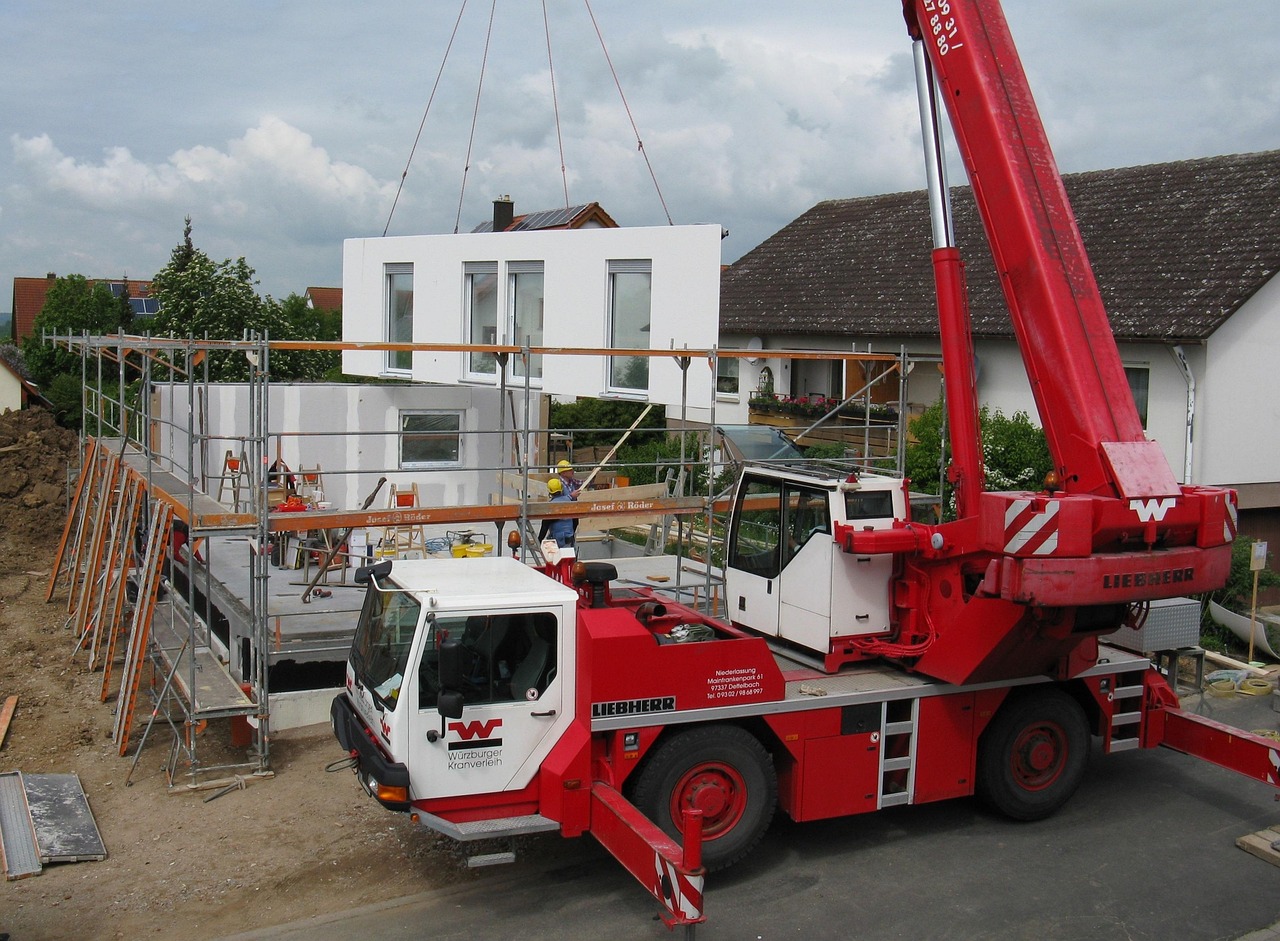
For project owners, designers, builders and material buyers, the practical question is direct: which material performs the required job with the lowest whole-life risk? The answer depends on where the material is used, how long it must last, how it will be maintained and whether it can be repaired, reused or recycled later.
What counts as building materials
The term building materials covers much more than visible finishes. It includes structural materials, enclosure products, insulation, waterproofing layers, interior boards, adhesives, sealants, coatings and site-formed mixtures such as concrete and mortar. In a typical project, the main categories include:
- Structural materials such as concrete, steel, masonry, engineered timber and dimensional lumber.
- Envelope materials such as roofing, exterior cladding, glazing, membranes, air barriers and insulation.
- Interior materials such as gypsum board, flooring, ceiling systems, doors, trim and wall finishes.
- Service-support materials such as firestopping, acoustic products, sealants, pipe insulation and equipment pads.
- Temporary and enabling materials such as formwork, bracing, packaging and protection boards that may not remain in the finished building but still affect cost and waste.
This wider view matters because a building is not a collection of isolated products. Materials interact. A high-performance wall, for example, depends on the cladding, sheathing, insulation, fasteners, air barrier, vapor control strategy and flashing details working together. A durable floor assembly depends not only on the surface finish, but also on subfloor flatness, moisture conditions, adhesive compatibility and expected traffic.
The main criteria for comparing materials
A useful material comparison starts with performance requirements, not product claims. The criteria below help prevent common mistakes, such as choosing a low-cost material that fails early or specifying a premium product that is not needed for the application.
Structural role and load path
Materials used in foundations, columns, beams, slabs, shear walls and roof structures must be selected by qualified professionals according to design loads, spans, exposure, seismic or wind requirements and applicable codes. Concrete is often valued for compressive strength and fire resistance. Steel is valued for its high strength-to-weight ratio and ability to achieve long spans. Timber and engineered wood can be efficient for many low- and mid-rise applications when moisture, fire and connection details are properly addressed. Masonry can provide mass, durability and fire separation, but it also requires careful detailing for movement, reinforcement and water management.
Fire, moisture and durability conditions
Material durability is highly location-specific. The same product may perform well in a dry interior and fail quickly in a wet, coastal, freeze-thaw or high-UV environment. Fire performance also depends on the full assembly rather than the surface product alone. The 2024 International Building Code organizes buildings by construction type and fire-resistance expectations, but actual requirements depend on local adoption, occupancy, height, area and assembly testing. A material should not be judged only by its generic name. A wall described as “wood,” “steel,” “concrete” or “gypsum” can have very different ratings depending on its tested assembly and installation.
Availability, buildability and local skills
A theoretically superior product can become a project risk if local crews have limited experience with it, replacement parts are hard to obtain or the installation window is too narrow for the schedule. Buildability should include lead time, storage needs, weather sensitivity, required tools, tolerance requirements and inspection complexity. For many projects, the best material is not the most advanced one. It is the one that meets performance requirements reliably within the capabilities of the project team.
Maintenance and repair over time
Upfront cost is only one part of material value. Flooring that needs frequent replacement, cladding that requires repeated recoating or sealants that are difficult to access can become expensive over a building’s service life. Maintenance planning should consider expected service intervals, cleaning methods, spare-part availability and whether damaged areas can be repaired locally without removing large sections of adjacent material.
How common building materials compare
No single material is suitable for every project. The comparison below summarizes typical advantages and limitations, but final selection should always account for local code, climate, design intent and installation quality.
| Material category | Common strengths | Key limitations to check | Typical decision point |
|---|---|---|---|
| Concrete | High compressive strength, thermal mass, fire resistance, local availability in many markets | Embodied carbon from cement, cracking, curing quality, reinforcement corrosion risk | Use mix design, cement replacement options and durability detailing to match exposure conditions |
| Steel | High strength, long spans, prefabrication potential, recyclability | Corrosion protection, fire protection needs, price volatility, thermal bridging | Evaluate coating, fireproofing, recycled content and connection design |
| Masonry | Durability, acoustic mass, fire separation, impact resistance | Labor intensity, moisture management, movement joints, seismic reinforcement | Best value when detailing and skilled installation are available |
| Timber and engineered wood | Renewable feedstock when responsibly sourced, fast installation, good strength-to-weight ratio | Moisture, fire design, pests, supply certification, connection detailing | Suitable where design accounts for exposure, protection and code pathway |
| Glass and glazing | Daylight, views, architectural value, potential energy performance with proper units | Heat gain or loss, glare, bird safety concerns, breakage and seal failure | Match glazing specification to orientation, climate and envelope targets |
| Insulation | Energy performance, comfort, condensation control when correctly placed | Moisture sensitivity, fire characteristics, blowing agents, installation gaps | R-value alone is not enough; continuity and compatibility matter |
| Gypsum board and interior panels | Cost-effective interior finish, fire-rated assemblies, easy repair | Moisture damage, impact resistance, indoor air considerations | Select board type according to room use, fire rating and humidity exposure |
Why embodied carbon and resource use are changing specifications
Embodied carbon refers to greenhouse gas emissions associated with extracting, manufacturing, transporting, installing, maintaining and eventually disposing of materials. Operational energy is still important, but as buildings become more efficient, the material side of the carbon equation becomes harder to ignore.
The UNEP and GlobalABC Global Status Report for Buildings and Construction 2025–2026 states that cement, clinker, bricks, clay, steel, aluminium, copper and similar metals represent around 18 percent of total building-sector emissions. The IEA’s 2025 buildings analysis also notes that the emissions intensity of steel and cement has changed little compared with 2020, making material efficiency and procurement decisions important levers.
This does not mean every project should simply avoid concrete, steel or glass. These materials often provide essential structural, safety or performance benefits. The better approach is to use the right quantity, specify lower-impact options where technically appropriate and reduce waste. Practical strategies include optimizing structural grids, avoiding unnecessary overdesign, using supplementary cementitious materials where approved, selecting recycled-content steel where available, designing for standard sheet or panel sizes, and considering reuse before demolition.
Environmental Product Declarations, often called EPDs, are increasingly used to compare products within the same category. ISO standards such as ISO 14025 and ISO 21930 provide frameworks for product environmental declarations, while building rating systems use EPDs and whole-building life-cycle assessment to support material decisions. However, EPDs require careful interpretation. A declaration for one product should not be used to make broad claims about an entire material family. The most reliable comparisons are between similar products serving the same function, measured under compatible product category rules and life-cycle boundaries.
Construction waste should be part of material selection
Waste is often treated as a site-management issue, but many waste problems begin during design and procurement. The U.S. Environmental Protection Agency estimated that 600 million tons of construction and demolition debris were generated in the United States in 2018, more than twice the amount of municipal solid waste generated that year. In that estimate, concrete and asphalt concrete made up the largest shares, followed by wood products, drywall and plaster, asphalt shingles, brick and clay tile, and steel.
These figures show why material planning should consider demolition, renovation and end-of-life pathways. Heavy materials can sometimes be crushed and reused as aggregate. Metals are widely recycled where collection systems exist. Timber may be reused, recycled or downcycled depending on treatment, contamination and local markets. Gypsum board can be more difficult when mixed with other waste streams or exposed to moisture. Composite products may offer strong performance during use but can be hard to separate at the end of life.
Designing with waste reduction in mind does not require a complicated system. It can start with simple choices: use standard module dimensions, avoid unnecessary product variety, coordinate openings and penetrations early, specify durable finishes in high-wear areas, and require clear sorting plans for major material streams. Prefabrication can also reduce waste when factory production is well coordinated, although transport distance and packaging should still be considered.
A practical checklist before specifying building materials
Before a material is approved for purchase, project teams should test it against a structured checklist. This reduces the risk of selecting a product for one attractive feature while overlooking a major constraint.
- Confirm the function. Is the material structural, protective, decorative, thermal, acoustic, fire-rated, waterproofing-related or a combination of these?
- Check code and standard requirements. Does the product or assembly meet local building code, fire rating, structural, accessibility and health requirements?
- Match the exposure. Will the material face moisture, UV radiation, chemicals, impact, freeze-thaw cycles, pests, high temperatures or heavy traffic?
- Review compatibility. Are adjacent materials, adhesives, sealants, coatings, fasteners and membranes chemically and physically compatible?
- Assess installation risk. Does the project team have the skills, tools, weather window and inspection process needed for correct installation?
- Compare whole-life cost. Include maintenance, repair, cleaning, replacement intervals and disruption, not only purchase price.
- Request documentation. Product data sheets, safety data sheets, test reports, warranties, EPDs and sourcing certificates may all be relevant depending on the product.
- Plan for end of life. Can the material be repaired, removed, reused, recycled or safely disposed of?
This checklist is especially useful when comparing products that appear similar. Two insulation boards, cladding panels or flooring products may have comparable prices but very different fire behavior, moisture tolerance, warranty conditions or environmental documentation.
Common mistakes in building material decisions
One common mistake is treating material names as performance guarantees. “Concrete,” “steel,” “timber,” “vinyl,” “stone” and “glass” are broad categories, not complete specifications. Strength class, coating, thickness, density, additives, source, manufacturing method and installation details can all change performance.
A second mistake is comparing upfront price without considering the assembly. A cheaper panel may require more framing, additional waterproofing, specialized fasteners or frequent maintenance. A more expensive product may be economical if it reduces labor, shortens the schedule or lasts longer in a demanding location.
A third mistake is using sustainability claims without boundaries. Recycled content, renewable sourcing, low carbon, low VOC and recyclable are not interchangeable terms. A material can perform well on one measure and poorly on another. Claims should be supported by relevant documentation, and comparisons should be made between products that serve the same purpose.
A final mistake is ignoring local conditions. A material proven in one climate may not be suitable in another. Coastal corrosion, wildfire exposure, termite risk, humidity, snow loads and urban heat can all change the correct specification. Good material selection combines general industry knowledge with local technical review.
Frequently asked questions
What are the most important building materials in construction?
The most common major materials include concrete, steel, timber, masonry, glass, insulation, gypsum board, roofing products and interior finishes. Their importance depends on the building type. A warehouse, single-family house, high-rise apartment and hospital will each rely on a different material mix.
Are low-carbon building materials always better?
Not automatically. A lower-carbon product must still meet structural, fire, moisture, durability and health requirements. The best choice is usually the material or assembly that meets the performance need with the lowest whole-life impact and acceptable risk.
How can buyers compare building materials fairly?
Start with function, location and required performance. Then compare products within the same category using technical data, test reports, maintenance expectations, warranty terms, EPDs where available and installed cost. Avoid comparing materials only by unit price.
Why do building codes matter for material choice?
Codes set minimum requirements for safety, fire resistance, structural performance, accessibility and other public protections. Because codes are adopted and amended locally, a material that is acceptable in one jurisdiction may need additional testing, detailing or approval in another.
What is the most practical way to reduce material waste?
Coordinate design dimensions with standard product sizes, order accurately, protect materials on site, separate major waste streams and design assemblies that can be repaired or removed. Waste reduction is most effective when it begins before procurement, not after demolition or installation.
The bottom line
Building materials should be selected through a whole-life lens. Cost, strength and appearance still matter, but they are only part of the decision. A stronger specification asks how a material will perform in its assembly, how it will age, what documentation supports its claims, how much waste it may create and whether lower-impact alternatives can meet the same need. As codes, rating systems and procurement practices place more attention on carbon, resilience and circular construction, material literacy is becoming a core skill for every building project.